

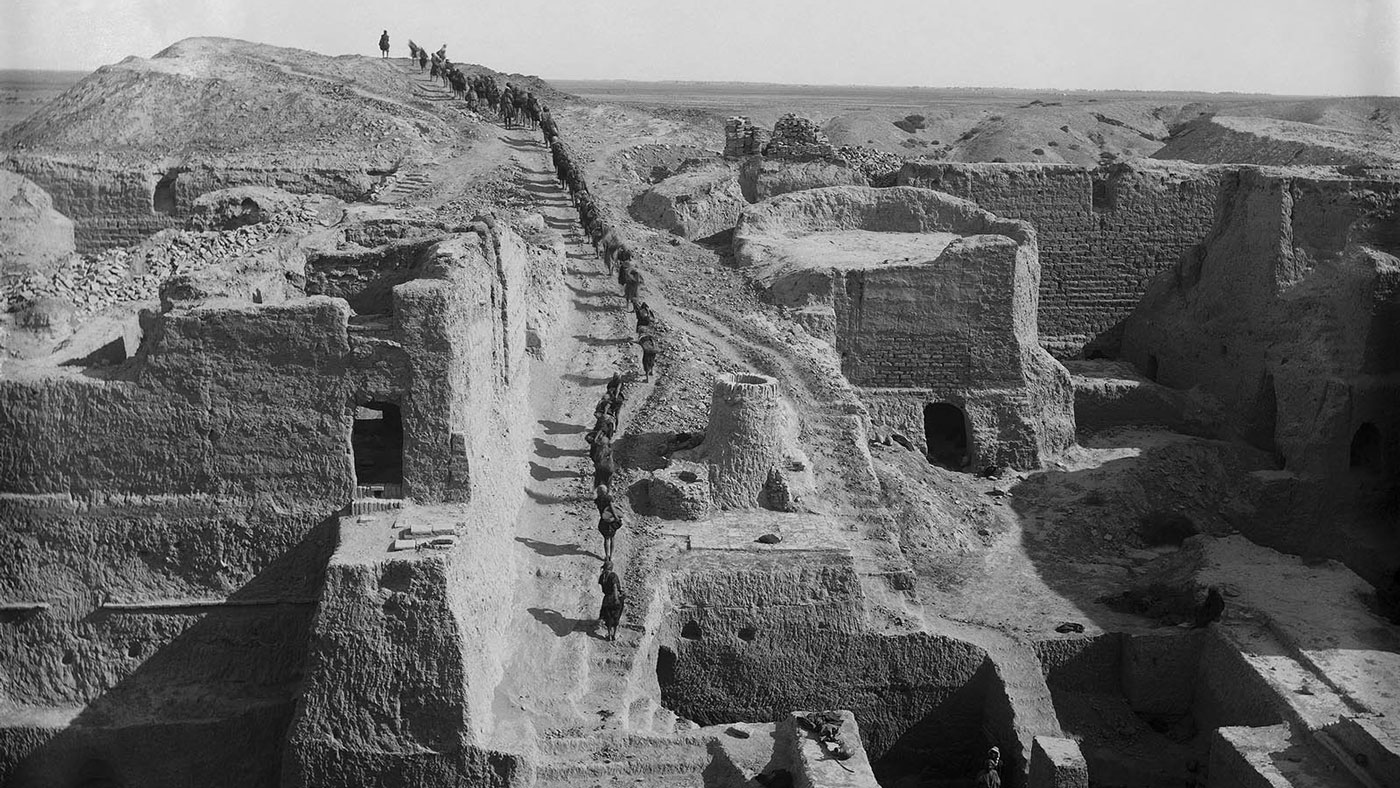
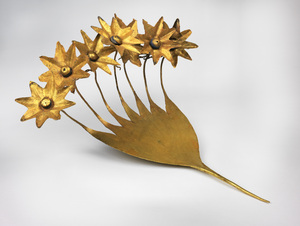
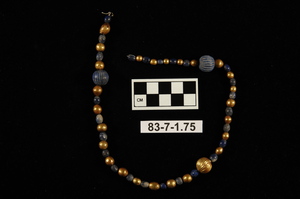
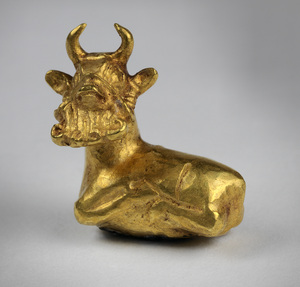
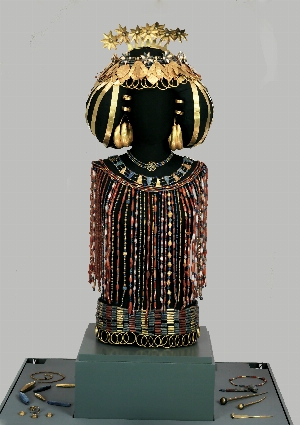
Located in southern Iraq, near the former northern limits of the Persian Gulf, Ur was one of the most famous archaeological excavations—along with Tutankhamun’s tomb in Egypt—during the early 20th century. Frequently described in the popular press, the work at Ur brought the magic of archaeology to life, particularly by tying the discoveries into familiar biblical stories. Between 1922 and 1934, the Joint Expedition of the British Museum and the Penn Museum was directed by C. Leonard Woolley and uncovered some of the most well-known and celebrated art from ancient Mesopotamia. These finds were divided between the two partner institutions (25% each) and the Baghdad Museum in Iraq (50%).
- Object[179]
- yes[179]
- yes[179]
- near eastern[179]
- amulet[1]
- applique[17]
- bead[4]
- beads[3]
- belt[1]
- bowl[2]
- bracelet[3]
- brim[1]
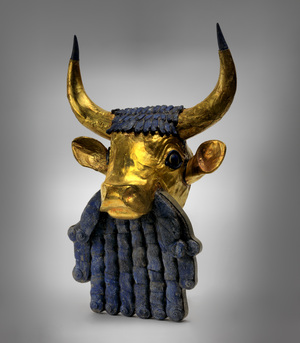
- bull head[1]
- cape (clothing)[30]
- chain[1]
- chisel[3]
- cosmetic container[1]
- cylinder seal[2]
- dagger[1]
- diadem[74]
- drinking tube[1]
- earring[9]
- fillet[1]
- finger ring[5]
- frontlet[1]
- garment pin[2]
- garter[1]
- hair comb[1]
- hair pin[1]
- hair ribbon[1]
- hairring[4]
- jewelry[1]
- lyre fragment[1]
- ornament[1]
- ostrich egg[1]
- pendant[52]
- pin[1]
- ribbon[1]
- rosette[1]
- spear[2]
- spouted bowl[1]
- statue[1]
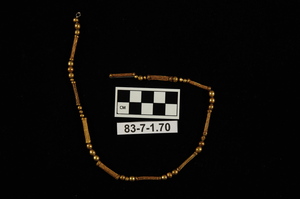
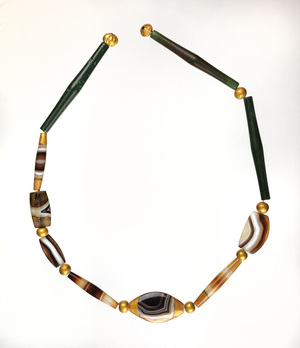
- string of beads[40]
- tweezer[1]
- whetstone[1]
- wreath[4]
- akkadian[1]
- early dynastic iii[85]
- sargonic[1]
- beech leaf[1]
- bull[3]
- bull head[1]
- child[1]
- date palm[12]
- female figure[1]
- flower[17]
- fly[2]
- fruit[17]
- goat[3]
- goddess[1]
- introduction[1]
- leaves[17]
- mother[1]
- ostrich egg[1]
- ram[3]
- rosette[19]
- rug beater[15]
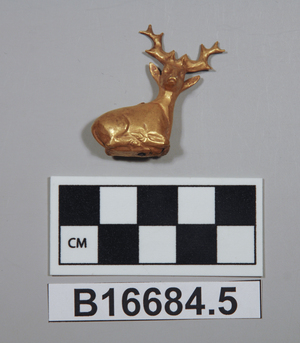
- stag[2]
- tree[1]
- wheat stalk[6]
- agate[3]
- bitumen[33]
- carnelian[29]
- copper alloy[2]
- electrum[1]
- gold[179]
- jasper[1]
- lapis lazuli[53]
- limestone[1]
- marble (stone)[2]
- ostrich egg shell[1]
- sandstone[1]
- sard[1]
- shell[2]
- silver[21]
- wood[2]
- yes[100]

1 - 30 of 179 Records
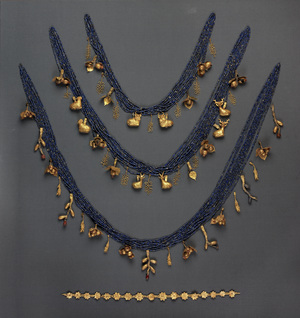
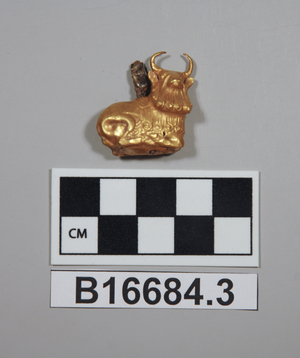
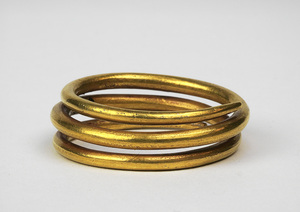

1 - 30 of 179 Records