


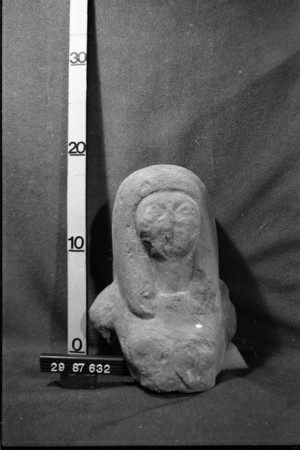
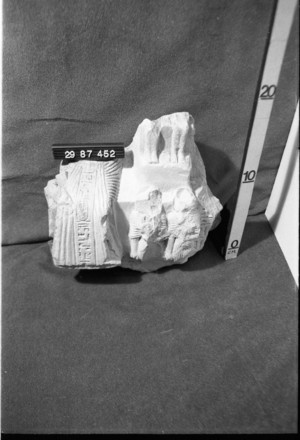
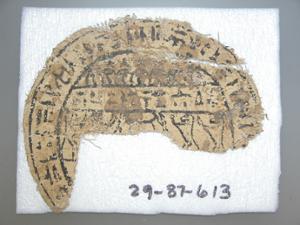
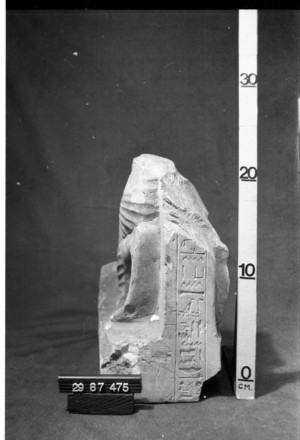
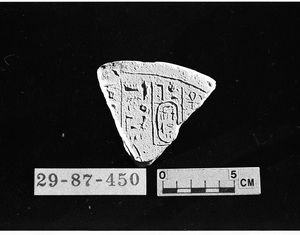
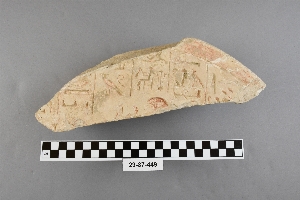
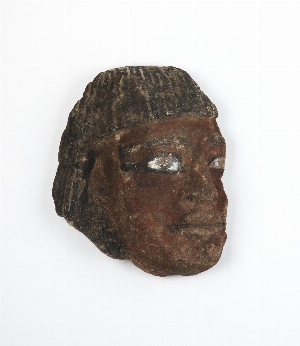
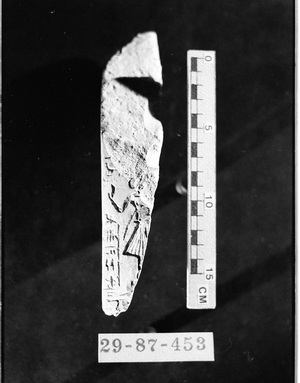
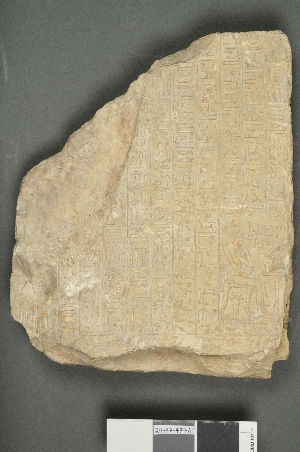
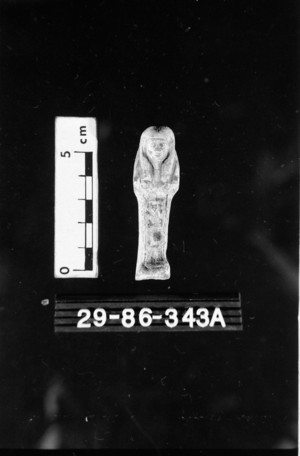
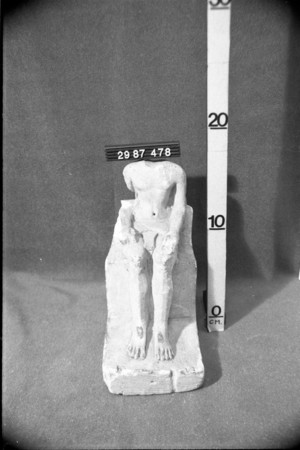
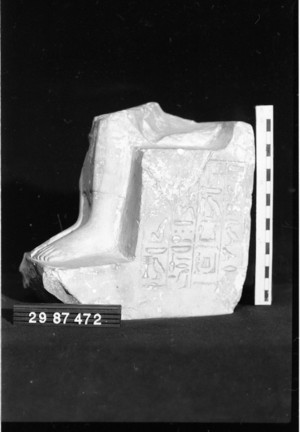
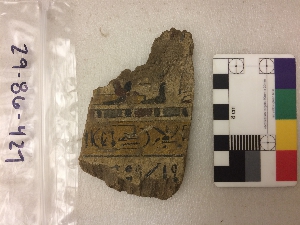
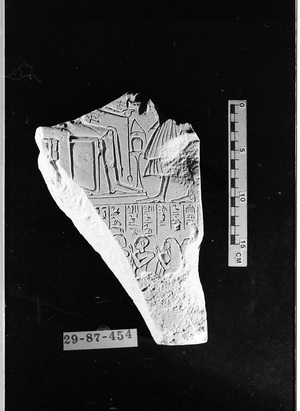
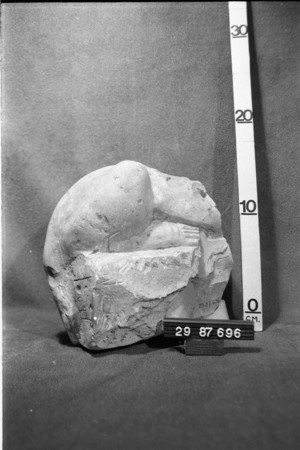
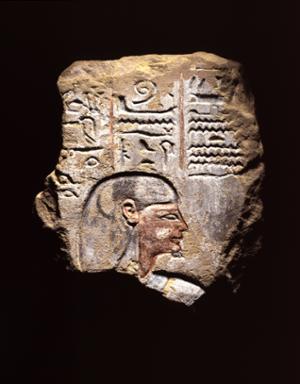
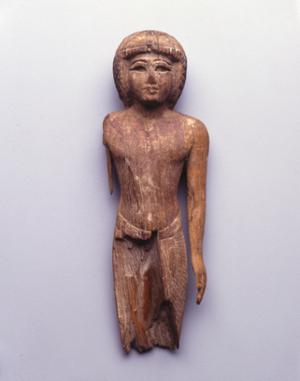
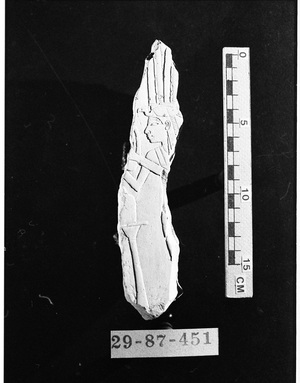
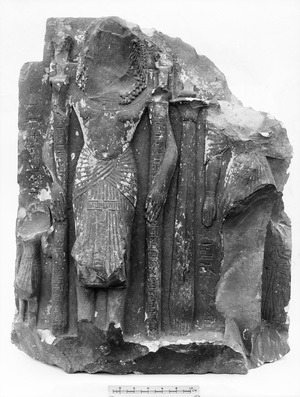
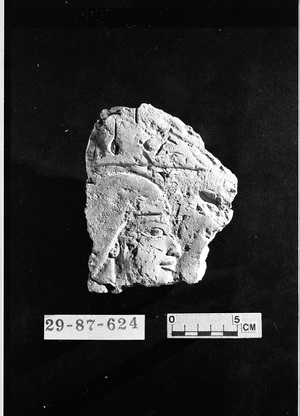
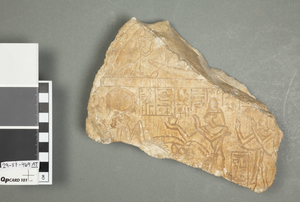
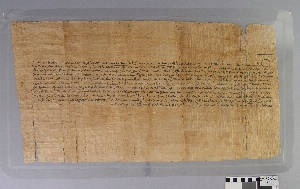
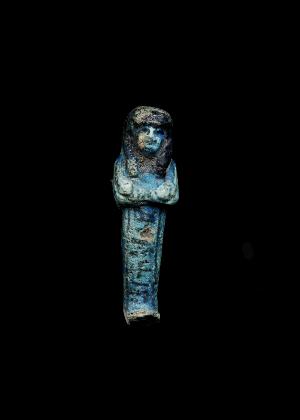
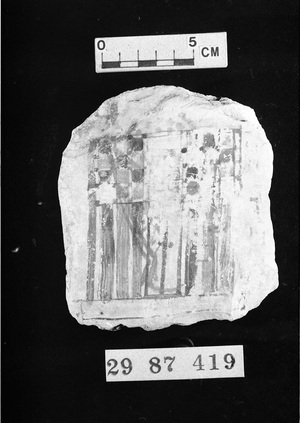
Located on the west bank of the Nile near Thebes, the Egyptian site of Dra Abu el-Naga is an important non-royal cemetery or necropolis. From 1921 to 1923, Clarence Fisher excavated at the site, focusing on the tombs of New Kingdom officials and the mortuary complex of the 18th Dynasty King Amenhotep I and his wife Nefertari (1525-1504 BCE). His excavations provided significant artifacts for the Penn Museum, including statuary, pottery funerary furnishings, and painted reliefs.
- Object[102]
- egyptian[102]
- amulet[1]
- bottle[1]
- bowl[2]
- box fragment[1]
- brick[10]
- canopic jar[5]
- canopic jar lid[1]
- cartonnage[4]
- coffin[1]
- funerary cone[1]
- funerary stela[1]
- head rest[2]
- hypocephalus[2]
- jar[1]
- lid[1]
- manuscript[3]
- model[2]
- mummy mask[1]
- ostracon[2]
- relief fragment[4]
- sarcophagus fragment[1]
- shabti[1]
- shabti fragment[16]
- shawabti[7]
- statuary[11]
- statue[4]
- statue fragment[1]
- statuette[3]
- stela[6]
- stela fragment[9]
- dra abu el-naga[102]
- egypt[102]
- 303 x/1[2]
- area 1[3]
- court of tomb 15[1]
- court of tomb 159[1]
- courtyard[1]
- dan 14[1]
- dan 3[1]
- debris above u.c. 288[1]
- debris opposite tomb xi[1]
- l cemetery x debris west of rock scrap x/2[1]
- l cemetery, ii. 2. surface x/1[1]
- l. cemetery, i. 1. surface x[1]
- l.c. 24 a, x/13[1]
- l.c. ii, 3, surface x x1[1]
- l.c. iii, 20 shaft, x/5[1]
- l.c. iv, 1--2, debris x[1]
- l.c. iv, 3, 35, x/1[1]
- l.c. vi[1]
- l.c. vi, 1, 71 shaft x, x/3[1]
- l.c. vi, 1, surface/x, ca. 20 cm. below road, x/2[1]
- l.c. vi, 2, 53 shaft, x/3[1]
- l.c. vi, 2, 60[1]
- l.c. vi, 2--3, 59, x/6[1]
- l.c. vi, 3, 55, x/3[1]
- l.c. vii. 2: 63x4[1]
- lc 3,50 a[1]
- lc vi[4]
- lc vi2,60[1]
- lc6[1]
- lc6; 2/60/x/3[1]
- lower cemetery, tomb 76[1]
- lower terrace debris[1]
- no. 1 tomb court[1]
- pit courtyard of tomb 15/x[3]
- pyramid 4[2]
- south of white wall[1]
- t162[1]
- t21x[1]
- tomb 44 in the lower cemetery[1]
- tomb b. 3[1]
- tomb no. 1[1]
- tomb tt 283[3]
- tomb tt 283?[1]
- tt158[2]
- tt289[1]
- u.c. 156, from debris in tunnel to burial chamber[1]
- u.t. new area, near houses[1]
- uc289[1]
- demotic[3]
- egyptian language[9]
- hieratic[2]
- hieroglyphic[36]
- yes[102]

1 - 30 of 102 Records
1 - 30 of 102 Records