Skip Navigation Penn Museum logo
  • My Finds 0
Online Collections
  • Browse

    Browse

    Search Collections
    Highlights
    Collections Map
    Objects On View
    Video/Film
  • About

    About

    About Collections
    Access the Collections
    Download Data
    Rights and Permissions
  • Read More

    Read More

    Journal (1919-1935)
    Bulletin (1930-1958)
    Expedition (1958-Present)
    Publications
    Our Blog: Penn Museum Voices
    Websites
  • Search
  • Browse
    • Search Collections
    • Highlights
    • Collections Map
    • Objects On View
    • Video/Film
  • About
    • About Collections
    • Access the Collections
    • Download Data
    • Rights and Permissions
  • Read More
    • Journal (1919-1935)
    • Bulletin (1930-1958)
    • Expedition (1958-Present)
    • Publications
    • Our Blog: Penn Museum Voices
    • Websites
  • Search
  • Penn Museum logo
Online Collections
My Finds 0
Online Collections

Peale, Benjamin F. Specimens of the stone age of the human race as collected and arranged by Franklin Peale; Copied in photography with a catalogue and introduction, also various communications on the subject made by him to the American Philosophical Society. Philadelphia: 1873.

Reference

  • Object[251]
  • yes[251]
  • no[251]
  • european[251]
  • adze haft[3]
  • animal bone[1]
  • animal bone fragment[1]
  • antler[2]
  • arrowhead[25]
  • awl[9]
  • base sherd[1]
  • blade[34]
  • bladelet[8]
  • boat axe[1]
  • body sherd[1]
  • cast[4]
  • celt[28]
  • chip[1]
  • chisel[9]
  • chisel haft[3]
  • cleaver[1]
  • core[1]
  • dagger[1]
  • end scraper[13]
  • fish net[1]
  • flake[23]
  • flax[1]
  • fragment[4]
  • grinding stone[1]
  • hammer-axe[1]
  • hammerstone[5]
  • hand axe[10]
  • handle[3]
  • nucleus (lithic)[3]
  • pick[4]
  • piercer[1]
  • point[3]
  • pottery[1]
  • rim sherd[4]
  • sample[1]
  • scraper[15]
  • sherd[9]
  • sherds[1]
  • side scraper[1]
  • socket[5]
  • socket fragment[1]
  • spindle whorl[1]
  • splinter[7]
  • stag horn[1]
  • stone fragment[1]
  • tool[7]
  • tool haft[1]
  • wall[1]
  • whetstone[3]
  • wood[1]
  • abbeville[17]
  • amiens[1]
  • bern canton[12]
  • bridlington parish[2]
  • concise[1]
  • county down[2]
  • denmark[5]
  • derbyshire[4]
  • east riding[2]
  • england[110]
  • estavayer[1]
  • france[37]
  • germany[1]
  • giant's causeway[1]
  • hamburg[1]
  • inkwyl[1]
  • ireland[5]
  • lake biel[2]
  • lake leman[1]
  • lake moosseedorf[10]
  • lake neuchatel[44]
  • lake pfaffikon[3]
  • lake zurich[21]
  • menchecourt[3]
  • moosseedorf[10]
  • morigen[1]
  • moulin-quignon[1]
  • neuchatel[1]
  • neuchatel canton[1]
  • nidau[1]
  • north riding[47]
  • pickering[47]
  • portelette[3]
  • robenhausen[3]
  • saint-acheul[8]
  • scandinavia[8]
  • schwyz canton[9]
  • somme[37]
  • sweden[3]
  • switzerland[90]
  • vaud canton[8]
  • villeneuve[1]
  • wangen[9]
  • wanwyl[1]
  • weedon[1]
  • yorkshire[49]
  • zurich[12]
  • zurich canton[15]
  • 19th century[1]
  • abbevillian[1]
  • levallois[1]
  • lower acheulian[1]
  • lower levallois[1]
  • middle acheulian[9]
  • middle levallois[1]
  • modern[3]
  • neolithic[230]
  • abbevillian[1]
  • english[1]
  • lake dweller[1]
  • levallois[1]
  • lower acheulian[1]
  • lower levallois[1]
  • middle acheulian[9]
  • middle levallois[1]
  • neolithic[213]
  • swiss lake dweller[90]
  • " found in the peat with vases of celtic manufacture."[1]
  • "celtic tomb"[1]
  • at mouth of the tiniere villeneuve[1]
  • barrow[2]
  • barrow?[2]
  • celtic sepulture, beneath peat layer[1]
  • found at a depth of 50 cm. in "gallin layer"[1]
  • from peat "sepulture celtique"[1]
  • peat[1]
  • peat "celtique"[2]
  • peat layer[4]
  • steinberg = stone hill[1]
  • tomb[1]
  • turf of peat layer[1]
  • valley of the somme[9]
  • geometric motif[1]
  • animal bone[2]
  • antler[2]
  • basalt[1]
  • bone[22]
  • ceramic[14]
  • clay[3]
  • deer bone[1]
  • fiber[1]
  • flax[1]
  • flint[156]
  • gneiss[3]
  • granite[4]
  • horn (animal part)[1]
  • plaster[4]
  • quartzite[2]
  • sandstone[4]
  • serpentine[14]
  • stag bone[1]
  • stag horn[16]
  • stone[3]
  • terracotta[1]
  • yew[1]
  • incised[3]
  • yes[251]
european

121 - 150 of 251 Records
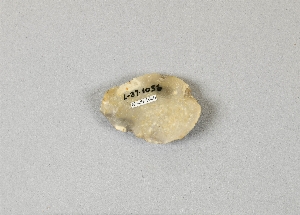
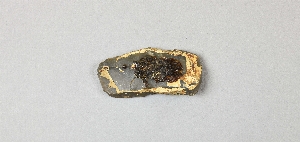
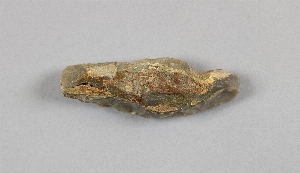
87-39-1005

87-39-1005

Blade

Add to My Finds +
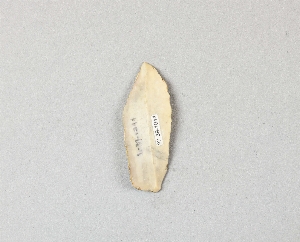
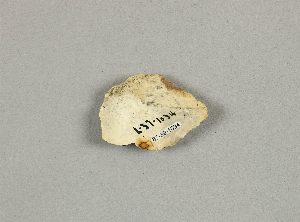
87-39-1044

87-39-1044

Blade

Add to My Finds +
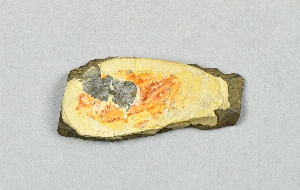
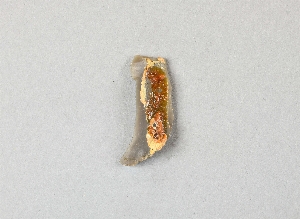
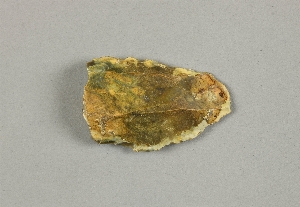
87-39-1146

87-39-1146

Blade

Add to My Finds +
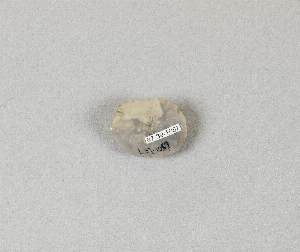
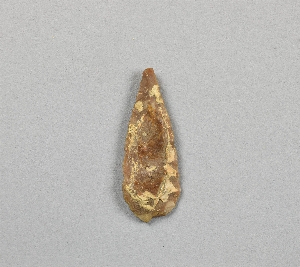
87-39-1057

87-39-1057

Scraper

Add to My Finds +
87-39-1184

87-39-1184

Pottery

Add to My Finds +
87-39-1063

87-39-1063

End Scraper

Add to My Finds +
87-39-1023

87-39-1023

Blade

Add to My Finds +
87-39-1106

87-39-1106

Flake

Add to My Finds +
87-39-1096

87-39-1096

Tool

Add to My Finds +
87-39-1158

87-39-1158

Awl

Add to My Finds +
87-39-1051

87-39-1051

Bladelet

Add to My Finds +
87-39-990

87-39-990

Celt

Add to My Finds +
87-39-989

87-39-989

Celt

Add to My Finds +
87-39-1056

87-39-1056

End Scraper

Add to My Finds +
87-39-1083

87-39-1083

Flake

Add to My Finds +
87-39-1133

87-39-1133

Hammerstone

Add to My Finds +
87-39-1178

87-39-1178

Chisel

Add to My Finds +
87-39-1165

87-39-1165

Splinter

Add to My Finds +
87-39-975

87-39-975

Blade

Add to My Finds +
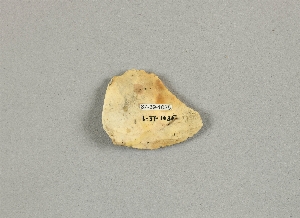
87-39-1035

87-39-1035

Flake

Add to My Finds +
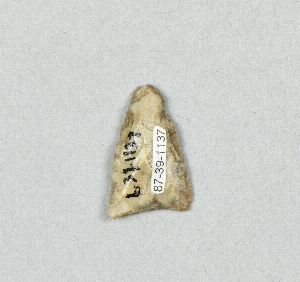
87-39-1137

87-39-1137

Arrowhead

Add to My Finds +
87-39-1104

87-39-1104

Celt

Add to My Finds +
87-39-1094

87-39-1094

Tool

Add to My Finds +
87-39-1034

87-39-1034

Flake

Add to My Finds +
87-39-1068

87-39-1068

Blade

Add to My Finds +
87-39-1077

87-39-1077

Arrowhead

Add to My Finds +
87-39-956

87-39-956

Flake

Add to My Finds +
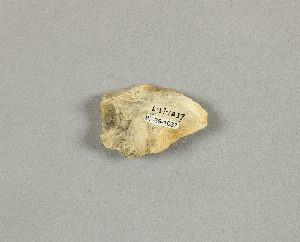
87-39-1037

87-39-1037

Flake

Add to My Finds +
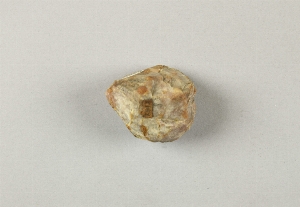
87-39-995

87-39-995

Nucleus (Lithic)

Add to My Finds +
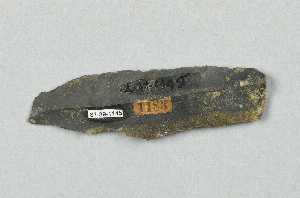
87-39-1145

87-39-1145

Blade

Add to My Finds +
87-39-1004

87-39-1004

End Scraper

Add to My Finds +
87-39-987

87-39-987

Sherd

Add to My Finds +
  • 1
  • 2
  • 3
  • 4
  • 5
  • 6
  • 7
  • 8
  • 9
121 - 150 of 251 Records
Penn Museum Homepage.

3260 South Street Philadelphia, PA 19104

215.898.4000 | © Penn Museum 2026

YouTube icon. Facebook icon. Instagram icon. LinkedIn icon.
ABOUT MEMBERSHIP SUPPORT PRESS HOST AN EVENT
The Penn Museum respectfully acknowledges that it is situated on Lenapehoking, the ancestral and spiritual homeland of the Unami Lenape.

World Wonders in your inbox.

Sign up for our Newsletter
Subscribe
UPenn logo.
Report Web Accessibility Issues and Get Help Contact Terms & Conditions Disclaimer Privacy