

Clothing
Bark Cloth
97-120-336
From: United States of America | Hawaiian Islands | Oahu
Curatorial Section: Oceanian
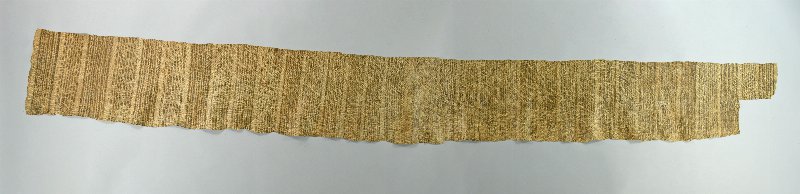
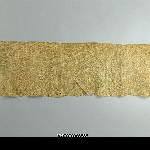
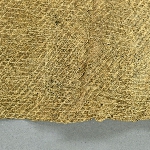
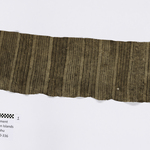
| Native Name | Kapa |
| Object Number | 97-120-336 |
| Current Location | Collections Storage |
| Culture | Hawaiian |
| Provenience | United States of America | Hawaiian Islands | Oahu |
| Culture Area | Oceania | Polynesia |
| Section | Oceanian |
| Materials | Bark Cloth | Pigment | Oil |
| Technique | Beaten |
| Description | A long, rectangular malo (loincloth) made of the inner bark of a tree. The malo is grey and oiled, with a square removed from one corner. Surface decoration of thin black lines. The line designs were created with bamboo kapa liners (lapa). A patterned bark beater with a maka upena (net mesh) motif was used in its production, leaving visible markings in the cloth. The kapa is referenced in William T. Brigham’s Ka Hana Kapa. It is noted in that the inclusion of black fibre in the beating process in the creation of the kapa is unique. It was proposed by Brigham that the maker of the kapa could have used two beaters, one in each hand, to beat together at the same time. Kapa cloth is produced from the inner bark of a tree, typically wauke (paper mulberry), which is cultivated, harvested, and processed through soaking, scraping, fermenting, and repeated beating to form and refine the cloth. Patterned beaters may be used during production to create watermarks that can reflect regional styles or maker affiliations. After drying, the cloth is decorated using natural dyes and bamboo implements. |
| Length | 420 cm |
| Width | 47 cm |
| Credit Line | Gift of the Academy of Natural Sciences of Philadelphia, 1997 |
| Other Number | L-120-336 - Old Museum Number | 4491 - ANSP Number |
Report problems and issues to digitalmedia@pennmuseum.org.