


| Native Name | Papahou |
| Object Number | P2241 |
| Current Location | Collections Storage |
| Culture | Maori |
| Provenience | New Zealand |
| Period | Te Huringa I Period |
| Date Made | 1800 - 1900 CE |
| Section | Oceanian |
| Materials | Wood |
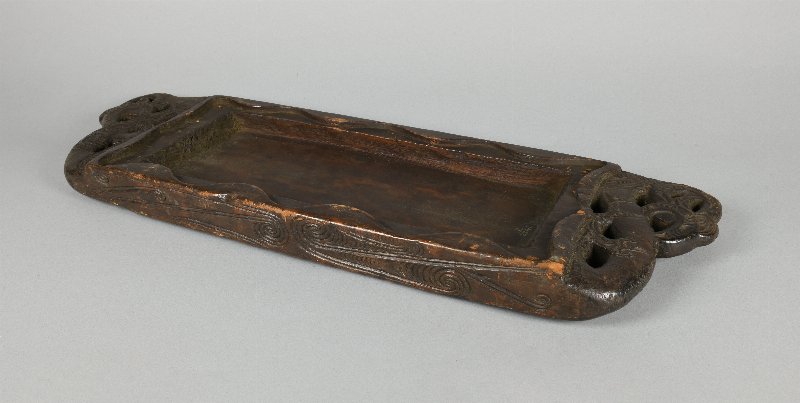
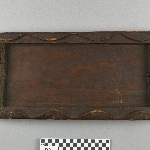
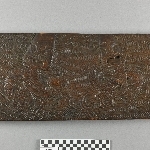
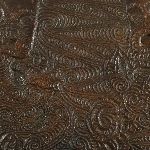
| Description | Base of a papahou (treasure box). In the center of the back, there are two wheku (carved face that depicts an ancestor) figures in Ngati Whatua style, with high-domed heads and twisting bodies. On either side of the box are manaia (spiritual guardians). The primary background surface decoration is a pakura (spiral crescent) pattern. A papahou is a carved wooden box used to contain personal belongings that are important to the owner. Similar to wakahuia (treasure box) in terms of function, papahou differ from wakahuia as they are more rectangular and shallow. While wakahuia tend to be more oval and deep. Papahou are generally found in the Northland region of New Zealand (Aotearoa). Because the items kept within the papahou carried the mana of their owners and ancestors, the papahou itself became a sacred object, symbolising the transmission of identity and status. A papahou served not only a practical role but also a deeply spiritual one, preserving and honoring the mana of those who had come before. |
| Length | 74 cm |
| Width | 24 cm |
| Thickness | 5 cm |
| Credit Line | Purchased from W. O. Oldman; Subscription of Herbert L. Clark in memory of Edward W. Clark, 1911 |
| Other Number | 17431 - Dealer's Number |
Report problems and issues to digitalmedia@pennmuseum.org.