

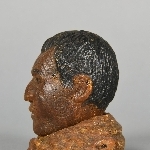
| Object Number | 29-58-141 |
| Current Location | Collections Storage |
| Culture | Maori |
| Provenience | New Zealand |
| Period | Te Huringa I Period |
| Date Made | 1800 - 1900 CE |
| Section | Oceanian |
| Materials | Kauri Gum | Pigment |
| Iconography | Human Head |
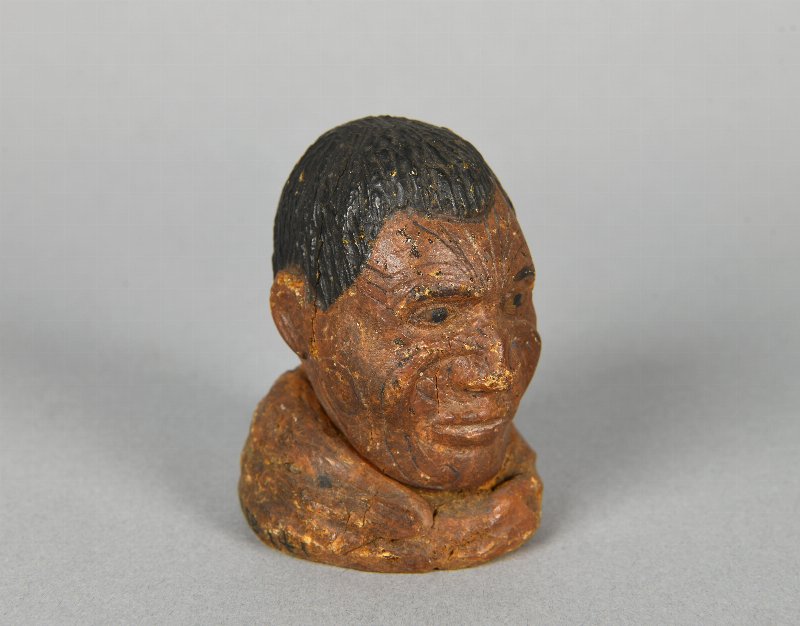
| Description | A small bust of a Māori man with tā moko (tattooing) made of kāpia (kauri gum). The hair pupils, and moko have been dyed black, most likely with a soot mixture. Busts were made of kauri gum starting in the mid-1800s as tourist pieces. Kauri gum carvings could be made both by hand and with a mould. Busts could be made to represent a specific person. Exporting kauri was a major industry in New Zealand from the mid-1800s until the early 1900s. Kauri gum was used to make varnish and linoleum. |
| Height | 8.6 cm |
| Credit Line | Received from various sources, pre-1929 |
Report problems and issues to digitalmedia@pennmuseum.org.