

| Native Name | Thangka |
| Object Number | 49-13-1 |
| Current Location | Collections Storage |
| Culture | Tibetan | Buddhist |
| Provenience | Tibet |
| Date Made | 19th Century |
| Section | Asian |
| Technique | Painted |
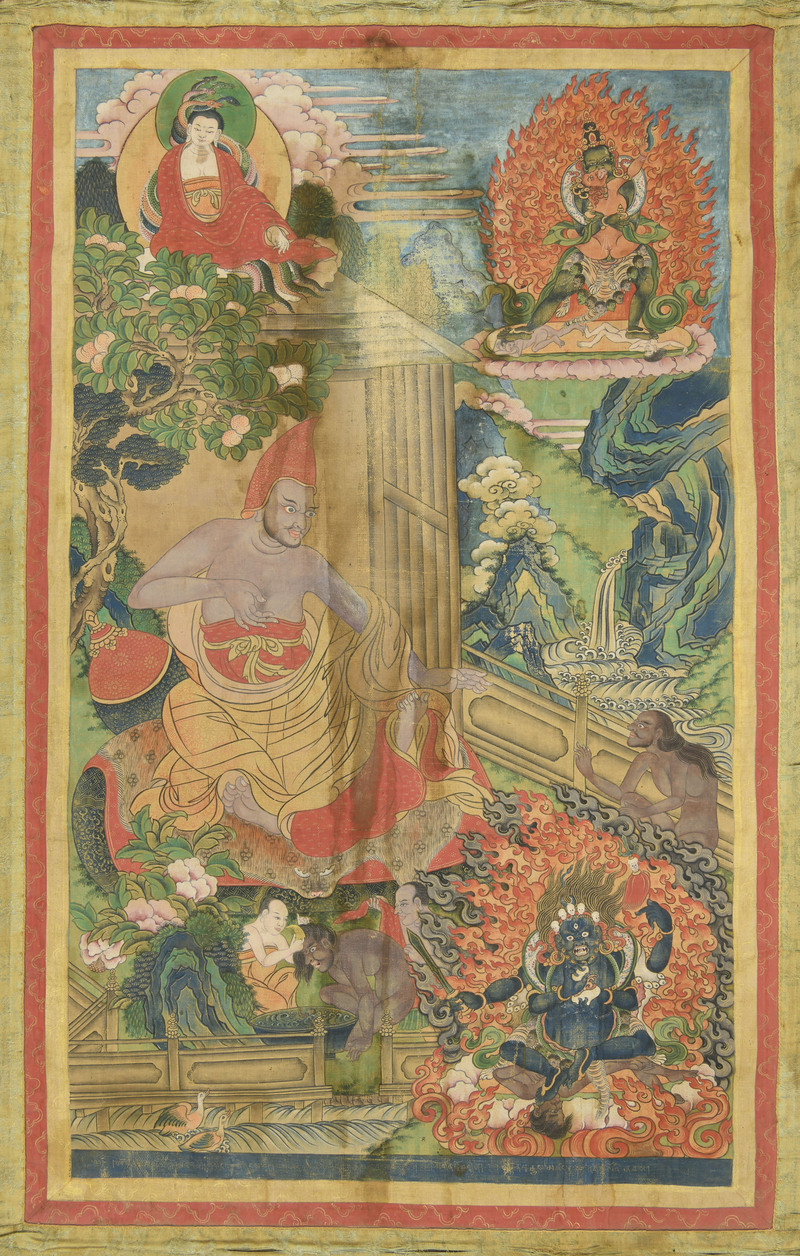
| Iconography | Bhavaviveka | Acharya | Lama | Nargarjuna | Yidam Samvara | Mahakala | Buddhist Spiritual Being |
| Inscription Language | Tibetan Language |
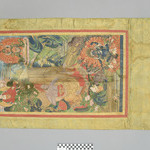
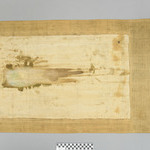
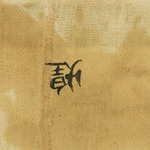
| Description | The acharya (holy man) Bhavaviveka, a great Buddhist teacher, founder of a school of Buddhism in India, and one of the line of previous incarnations of the Panchen Lamas of Tibet. He is represented as seated in a garden in front of his house converting a heretic from the sect of the naked ascetics (Digambaras). Below him, an ascetic who has been converted is receiving the tonsure at the hands of a monk, while an earlier convert presents him with a robe. Upper right is Nargarjuna (c. 2nd century CE), a previous great teacher of Buddhism, whose doctrines Bhavaviveka followed: upper left is a form of the Yidam Samvara (with his consort), B.'s tutelary deity: lower left is a form of Mahakala, B's demon-protector: all considered as helping him in the process of extending the faith. This is a fine example of a Tibetan religious painting in which the apparently disconnected elements are actually closely related in a single theme. Some chinese characters appear on the back. There is an inscription on the front at the bottom. A similar painting of the same subject is shown in J. Hackin, Asiatic Mythology (London, 1932), p. 172. |
| Length | 126 cm |
| Width | 59.5 cm |
| Credit Line | Gift of John F. Lewis, Jr., 1949 |
Report problems and issues to digitalmedia@pennmuseum.org.