

| Native Name | Whakawae |
| Object Number | 18131B |
| Current Location | Collections Storage |
| Culture | Maori |
| Provenience | New Zealand |
| Period | Te Huringa I Period |
| Date Made | 1800 - 1900 CE |
| Section | Oceanian |
| Materials | Totara Wood (Podocarpus totara) | Abalone |
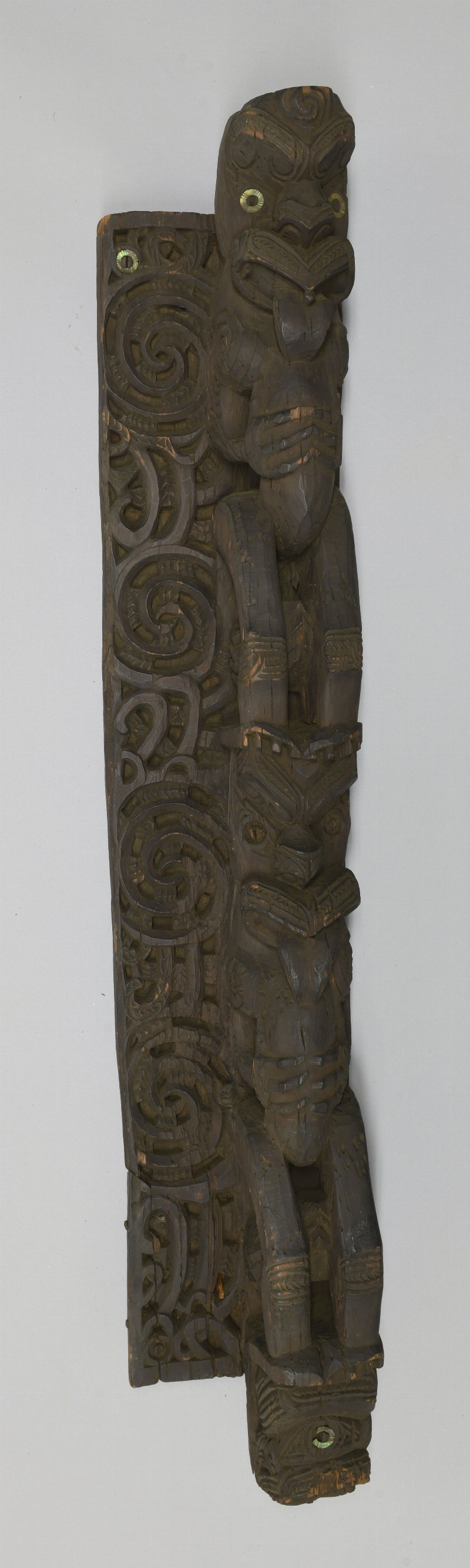
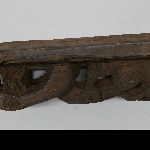
| Description | A wooden whakawae (door jamb). The back of the door jamb is flat, the front has two wheku figures, one standing on top of the other. The top wheku figure has pāua (abalone) shell eyes, and both figures have their tongues extended and their hands lying across their stomachs. Next to the wheku figures is a panel of takarangi (double spiral) spirals with pāua (abalone) shell inserts. Whakawae are carved side posts that are part of a wharenui (meeting house). They help support the weight of the maihi (facing boards on the gable of a house). A wheku is a carved human face that often represents the head of an ancestor. According to notes made by the collector C.D. Voy, the whakawae was formerly on a Māori Chief's house. |
| Height | 123 cm |
| Width | 21 cm |
| Credit Line | Gift of William Pepper, 1891 |
Report problems and issues to digitalmedia@pennmuseum.org.