

Lintel
Doorway Part
29-58-159A
From: New Zealand
Curatorial Section: Oceanian
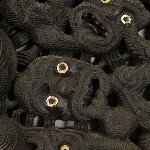
| Native Name | Pare |
| Object Number | 29-58-159A |
| Current Location | Collections Storage |
| Culture | Maori |
| Provenience | New Zealand |
| Creator | Tene Waitere | Neke Kapua |
| Section | Oceanian |
| Materials | Totara Wood | Abalone |
| Iconography | Manaia |
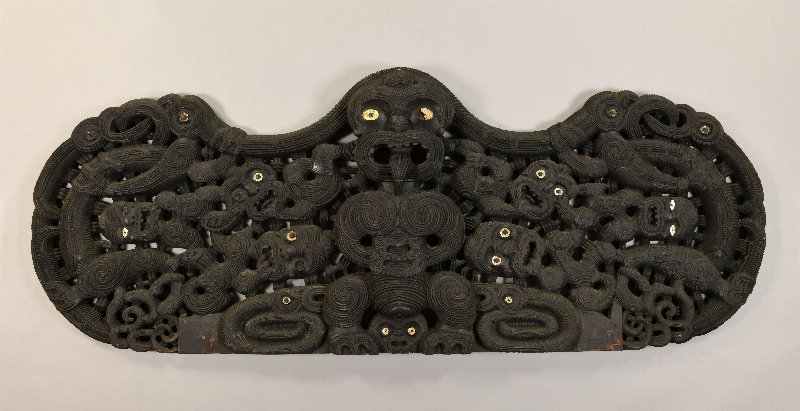
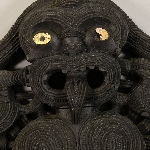
| Description | A wooden pare (door lintel) made of one piece of totara wood. Broad, rounded lintel entirely carved in high, rounded openwork. In the center is a large wheku (carved face that depicts an ancestor) figure with tongue extended and three-fingered hands on its belly. The central figure is flanked, on each side, by three smaller wheku figures with sinuous bodies, and figures of a manaia (spiritual guardian). The eyes of the human heads and some of the manaia are inlaid with pāua (abalone) shell. A pare is an important architectural element that is part of a wharenui (meeting house). The pare is a carved lintel hung above the doorway, often symbolizing protection and serving as a spiritual threshold between the outside world and the sacred interior of the building. This lintel is copied by Eramiha Neke Kapua and Tene Waitere from a pare now in the Auckland Museum (AM. 164). It was made under the direction of Charles E. Nelson in 1898 and then displayed at the 1904 St. Louis Fair by T.E. Donne. |
| Height | 74 cm |
| Width | 183.5 cm |
| Credit Line | Purchased from Thomas Edward Donne, 1904 |
Report problems and issues to digitalmedia@pennmuseum.org.