


| Native Name | Tekoteko |
| Object Number | 18130B |
| Current Location | Collections Storage |
| Culture | Maori |
| Provenience | New Zealand |
| Period | Te Huringa I Period |
| Date Made | 1800 - 1900 CE |
| Section | Oceanian |
| Materials | Wood | Abalone |
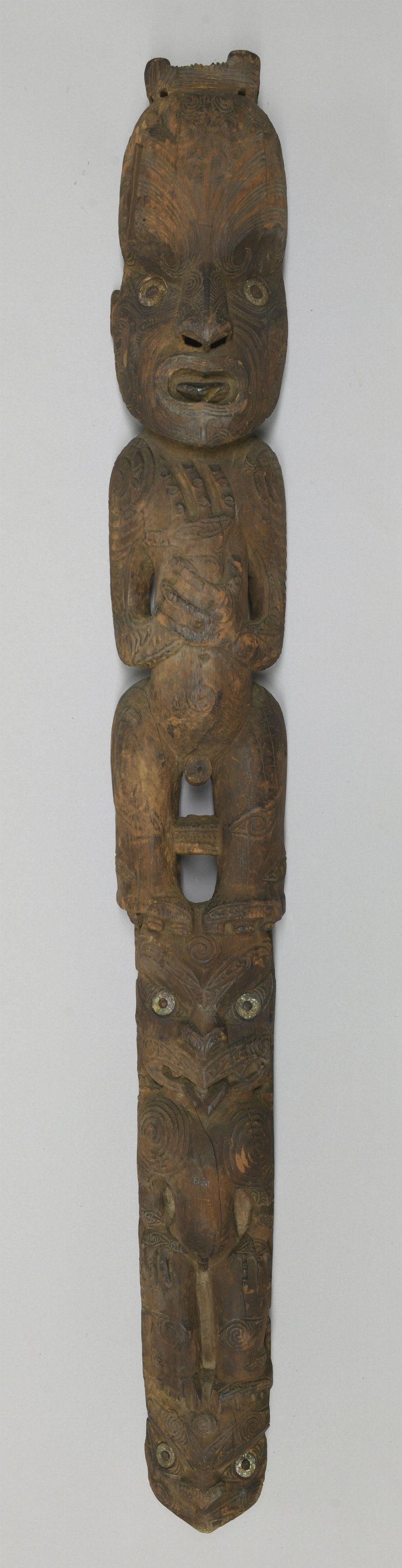
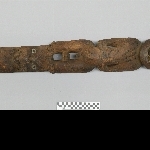
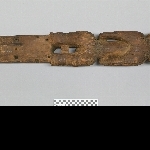
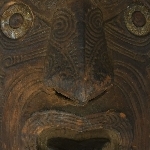
| Description | A wooden tekoteko (gable figure) with a complete human figure that has a carved, full facial moko (tattoo), along with moko present on the arms and legs. The mouth is open, and the eyes are made of pāua (abalone) shell. The figure's hands are clasped along the stomach, and they are standing on top of a second figure. The central figure is a wheku (carved face that depicts an ancestor), with abalone eyes, that stands on top of a carved head with abalone eyes. A tekoteko is a carved human figure, often representing an ancestor. It is typically placed on the gable of a wharenui (meeting house) and serves as a symbol of protection, identity, and ancestral presence. This tekoteko was formerly attached to the gable roof portico of a Māori Chief's house, as noted by C.D. Voy, the collector of the figure. |
| Height | 121.5 cm |
| Credit Line | Gift of William Pepper, 1891 |
Report problems and issues to digitalmedia@pennmuseum.org.