

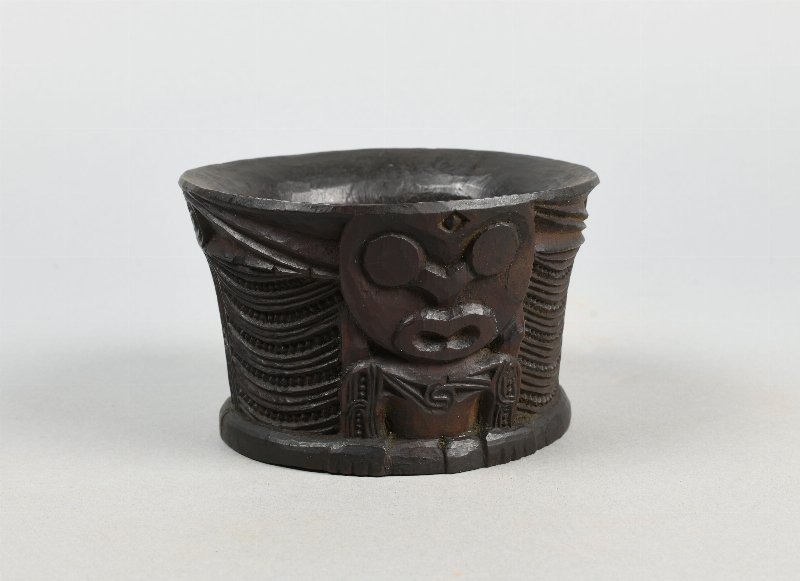
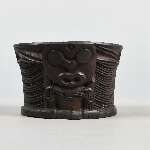
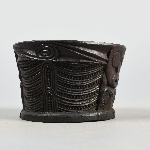
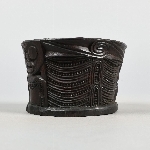
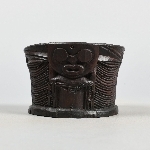
| Native Name | Tuki |
| Object Number | 18142 |
| Current Location | Collections Storage |
| Culture | Maori |
| Provenience | New Zealand |
| Period | Te Huringa I Period |
| Date Made | 1800 - 1900 CE |
| Section | Oceanian |
| Materials | Wood |
| Description | A tuki (mouthpiece for calabash) with two carved figures on opposite sides of the neck. Panels of carved pākati (overlapping triangular notches) patterns are on either side of the figures, with rauponga whakarare (alternating pākati and haehae) separating the panels. The neck has a flaring rim and is covered in black pigment and polished. A tuki is the mouthpiece for a taha huahua (calabash), which is a vessel made for holding food, typically preserved birds. A bird would be cooked and preserved in their own fat in the taha huahua. The calabashes would often be decorated and were brought out during feasts. |
| Height | 8.1 cm |
| Outside Diameter | 12.5 cm |
| Credit Line | Gift of William Pepper, 1891 |
| Other Number | 0104 - Cast Number |
Report problems and issues to digitalmedia@pennmuseum.org.