

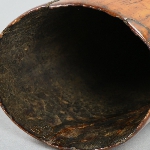
| Object Number | AF815 |
| Current Location | Collections Storage |
| Culture | Lovale |
| Provenience | Angola |
| Section | African |
| Materials | Ivory |
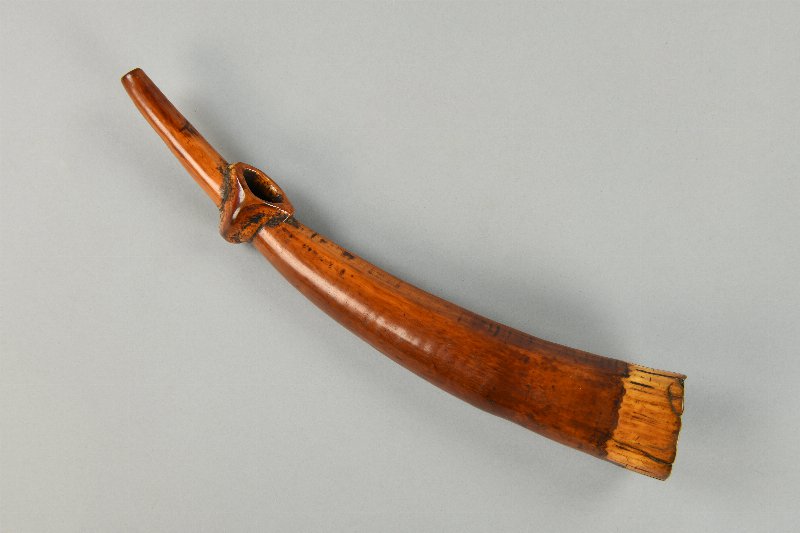
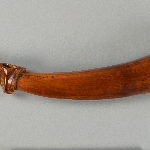
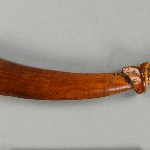
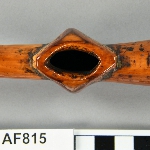
| Description | Cf. AF823 for form of mouthpiece region. The lug is pierced in the direction of the long axis of the tusk. The original label has "Tuvale", probably a clerical error for "Lovale"; but the prefix Tu- appears in tribal names to the northeast, in the upper Sankuru valley. With regard to horns AF815- AF844, Torday says: "Only in exceptional cases are ivory or antelope horns used to produce music, although it is quite possible for a skilled player to produce a tune. Commonly they are used for signaling or during relgious, or other ceremonies. Livingstone said ( and Buchner said the same thing) that a formerly enslaved person could at once be recognized by the effect the blow on the Kudu ( antelope) horn produced on him. The enslavers used these to rally the caravans. |
| Height | 6.99 cm |
| Length | 32.86 cm |
| Depth | 7.14 cm |
| Credit Line | Purchased from J. F. G. Umlauff, 1912 |
| Other Number | 22 - Other Number |
Report problems and issues to digitalmedia@pennmuseum.org.