

| Native Name | Namavali | Nambali |
| Object Number | 48-29-268 |
| Current Location | Collections Storage |
| Culture | Hindu | Indian |
| Provenience | India | Bengal |
| Period | 20th Century | 19th Century |
| Date Made | 19th Century - Early 20th Century |
| Section | Asian |
| Materials | Cotton |
| Technique | Block Printed | Woven |
| Iconography | Durga | Shiva | Shivalinga |
| Inscription Language | Bengali Language |
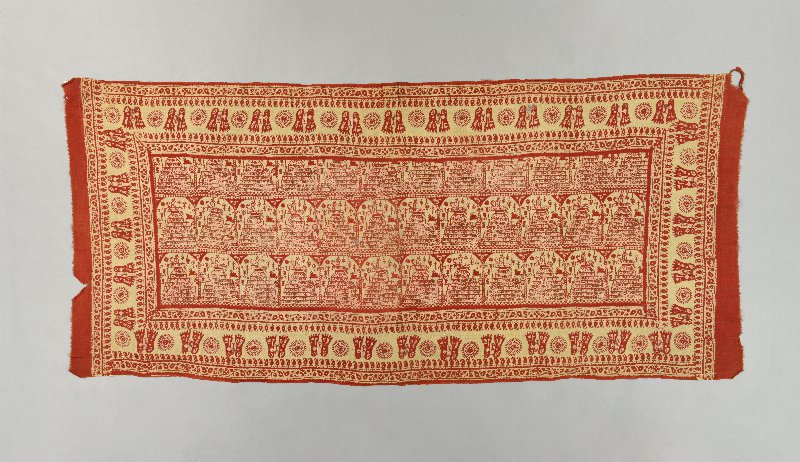
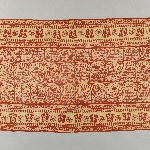
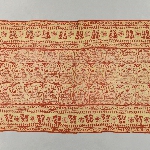
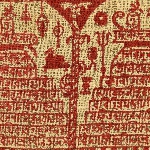
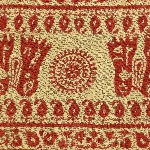
| Description | Prayer cloth known as a namavali or nambali meaning string of names. The central section of the textile has thirty six shiva linga with a snake wrapped around it with auspicious symbols around them and Bengali text on top. The top row has been cut off. The edges have footprints with symbols inside interspersed with a circular motif modeled after a chhapa stamp used to mark the bodies of Hindu devotees. The borders are made up of a mango motif also known as mankolam or kalka and is considered a symbol of fertility. During British rule these type of motif gained the English name "paisley". The text on the linga tells mentions Shiva and Durga. |
| Length | 179 cm |
| Width | 81 cm |
| Credit Line | Gift of Presbyterian Board of Missions, 1948 |
Report problems and issues to digitalmedia@pennmuseum.org.