

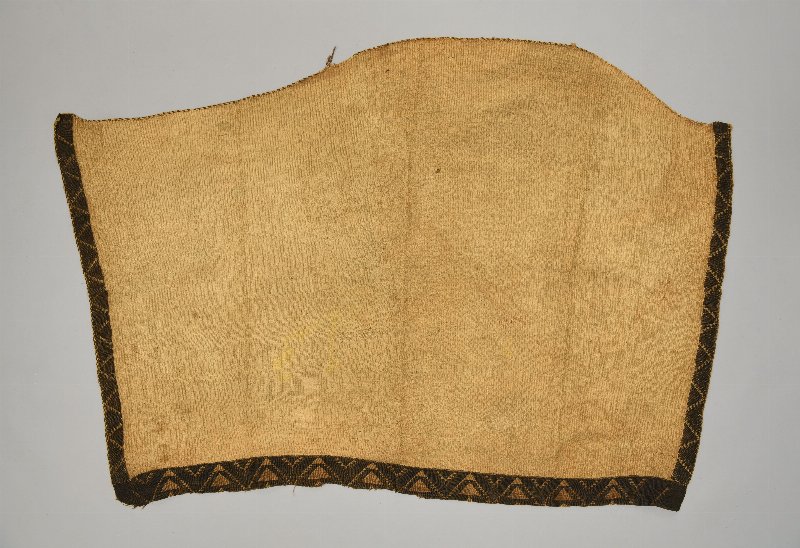
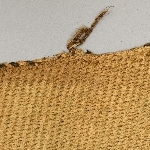
| Native Name | Kaitaka |
| Object Number | P3082 |
| Current Location | Collections Storage |
| Culture | Maori |
| Provenience | New Zealand |
| Period | Te Huringa I Period |
| Date Made | 1800 - 1900 CE |
| Section | Oceanian |
| Materials | New Zealand Flax | Pigment |
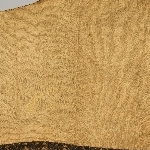
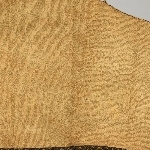
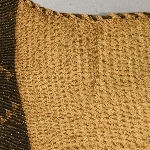
| Description | A kaitaka (cloak) made of muka (processed New Zealand Flax). Three tāniko borders in dark and light brown. Two narrow borders along the sides with serrated lines and one, somewhat broader, border at the bottom with repeated triangle variations. Twisted light-dark border along the undecorated edge. which has an asymmetrical, pronounced curve. The vertical wefts identify this as a particular fine kind of kaitaka called paepaeroa. The kaitaka is a Māori cloak renowned for its fine, silken texture. Made from muka (processed flax fiber) extracted from specially selected varieties of harakeke (New Zealand flax), the kaitaka has a distinctive golden sheen. These cloaks are typically large, designed to wrap around the wearer multiple times. The characteristic feature of a kaitaka is its tāniko borders, bands of intricate, multi-coloured geometric patterns woven along the sides and bottom edges. |
| Length | 152 cm |
| Width | 86 cm |
| Credit Line | Received from various sources, pre-1929 |
Report problems and issues to digitalmedia@pennmuseum.org.