

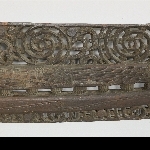
| Native Name | Taurapa |
| Object Number | 18126A |
| Current Location | Collections Storage |
| Culture | Maori |
| Provenience | New Zealand |
| Period | Te Huringa I Period |
| Date Made | 1800 - 1900 CE |
| Section | Oceanian |
| Materials | Wood | Abalone |
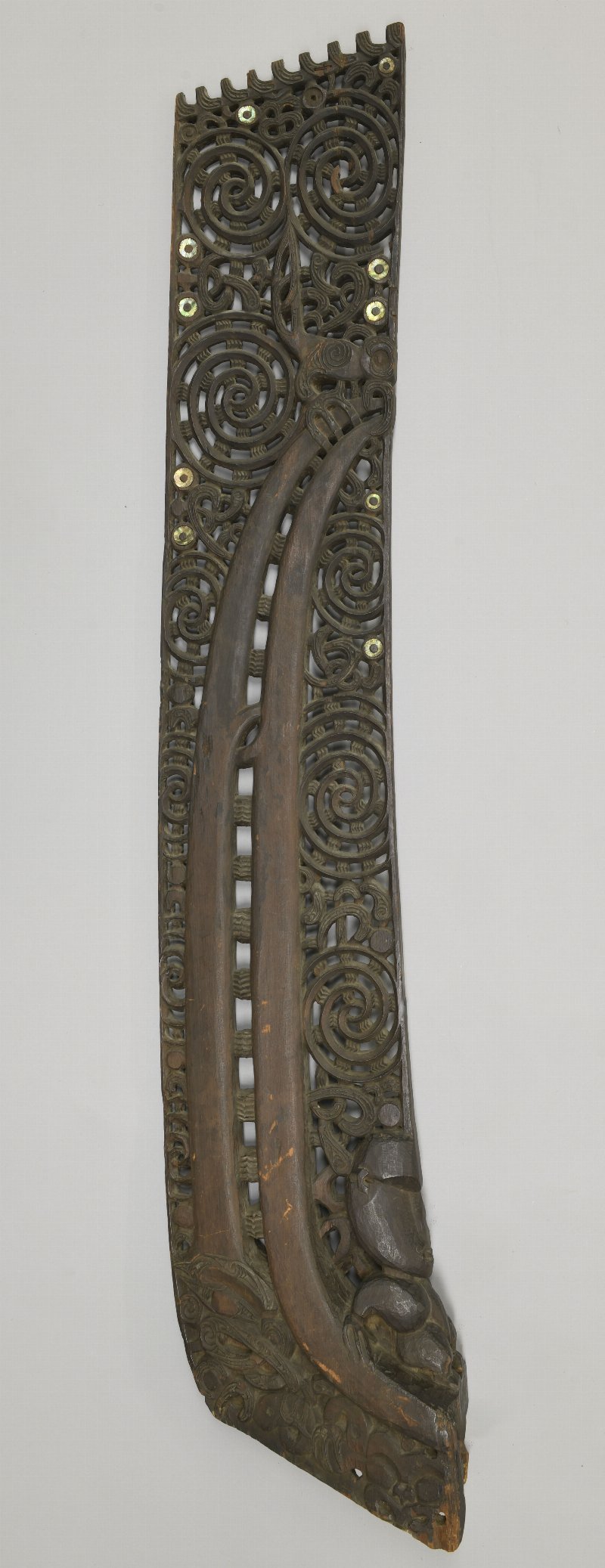
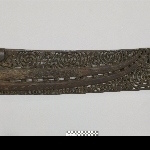
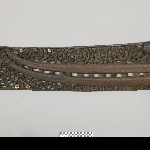
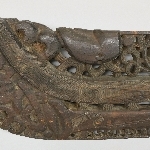
| Description | A taurapa (canoe stern post) of a waka (canoe) carved from one piece of wood. The principal design is takarangi/pitau carving, double interlocking spirals with rows of haehae (rows of carved ridges) and pākati (triangular notch). Two curved ribs that extend upwards from underneath a puhi kai ariki (carved figure). On one side, the curved ribs are undecorated; on the reverse, they have whakarare (distortion pattern) carvings. In between the pitau (spirals), there are taniwha (supernatural beings similar to a serpent/dragon) with pāua (abalone) eyes. The puhi kai ariki would be facing towards the bow to oversee the crew. Waka (canoes) are of central importance to Māori history and identity. Canoes were practical as they were necessary for trade, exploration, fishing and warfare but they were also symbols of Māori heritage. They represent the voyages that the ancestors undertook to migrate to and settle in New Zealand from their homeland. In Polynesian mythology this homeland is called Hawaiki, the original home of all Polynesians. A waka is also vital to personal and community identity, as each iwi (Tribal Nation) is associated with a specific waka, which connects a person to their ancestors and land. |
| Height | 16.5 cm |
| Length | 164 cm |
| Width | 33 cm |
| Credit Line | Gift of William Pepper, 1891 |
Report problems and issues to digitalmedia@pennmuseum.org.