


| Object Number | P3222A |
| Current Location | Collections Storage |
| Culture | Maori |
| Provenience | New Zealand |
| Period | Te Huringa I Period |
| Date Made | 1800 - 1900 CE |
| Section | Oceanian |
| Materials | Wood |
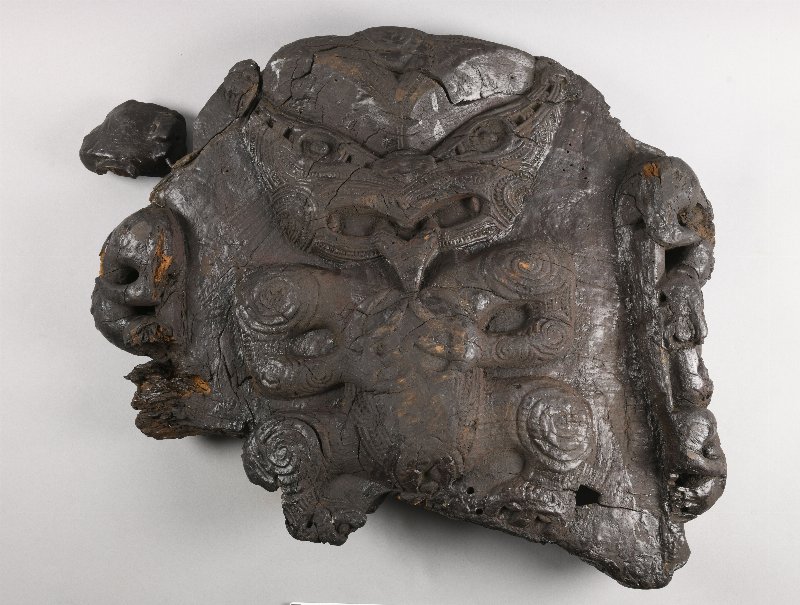
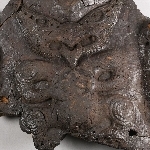
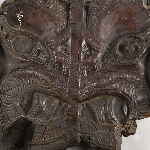
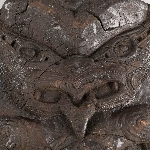
| Description | A wooden fragment most likely from a building, based on the shape of the fragment and the carvings along the sides. Both the front and back of the fragment are decorated. One side has a female wheku figure in relief, with her tongue extended. The figure has four-fingered hands on its chest and legs with three-toed feet flexed. Flanked, originally, by two fully-carved figures, in profile one above the other, on each side. The head of the top figure on the right side is missing, and the head of the top figure on the left is detached. The lower figure on the left is missing. The opposite side has a large wheku (carved face that depicts an ancestor) face, in relief. The wheku has pakura (spiral crescent) decorative elements. Whakairo, Māori carving, plays a vital role in the cultural and spiritual life of Māori communities, especially on buildings such as wharenui (meeting houses). These carvings are rich in symbolism and serve as visual representations of ancestry, legends, and important historical events. Whakairo communicates identity, heritage, and the mana (prestige/power) of the hapū or iwi. The carved figures often depict ancestors, linking the people to their whakapapa (genealogy) and providing a sense of belonging and continuity. Whakairo transforms buildings into living repositories of knowledge, ensuring that Māori traditions and values are preserved and respected across generations. |
| Height | 48 cm |
| Width | 64 cm |
| Depth | 12 cm |
| Credit Line | Purchased from W. O. Oldman, 1912 |
| Other Number | Unknown - Dealer's Number |
Report problems and issues to digitalmedia@pennmuseum.org.