

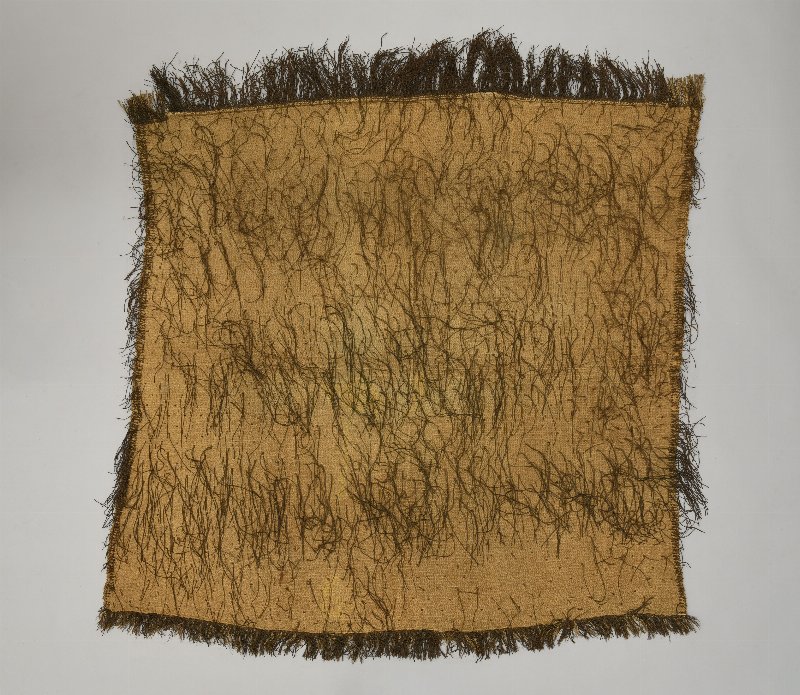
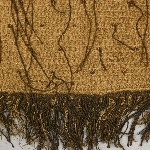
| Native Name | Korowai |
| Object Number | P2223 |
| Current Location | Collections Storage |
| Culture | Maori |
| Provenience | New Zealand |
| Period | Te Huringa I Period |
| Date Made | 1800 - 1900 CE |
| Section | Oceanian |
| Materials | New Zealand Flax |
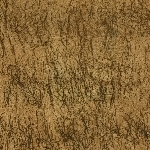
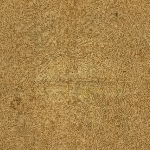
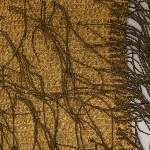
| Description | A korowai (cloak) made of muka (processed New Zealand flax). The cloak is rectangular with dark brown/black hukahuka (tassels) top and bottom, and along the edges. Tassels are also spaced in rows across the surface. The edge with the longer, thick fringe is the top; the fringe would hang down when worn. Korowai is a flax cloak that originated from a practical rain cape. The korowai became a more elaborate garment, often adorned with hukahuka (long cords of rolled muka fiber) or pokinikini, cylindrical strands of dried harakeke with intervals of black-dyed muka. A korowai can be worn in three primary styles: draped evenly over both shoulders and fastened at the chest; wrapped beneath one arm and secured at the opposite shoulder; or laid across a single shoulder and tied at the other. |
| Length | 141 cm |
| Width | 128 cm |
| Credit Line | Purchased from W. O. Oldman; Subscription of Herbert L. Clark in memory of Edward W. Clark, 1911 |
| Other Number | 1470 - Dealer's Number |
Report problems and issues to digitalmedia@pennmuseum.org.