


| Native Name | Tauihu |
| Object Number | P3109 |
| Current Location | Collections Storage |
| Culture | Maori |
| Provenience | New Zealand |
| Period | Te Huringa I Period |
| Date Made | 1800 - 1900 CE |
| Section | Oceanian |
| Materials | Wood |
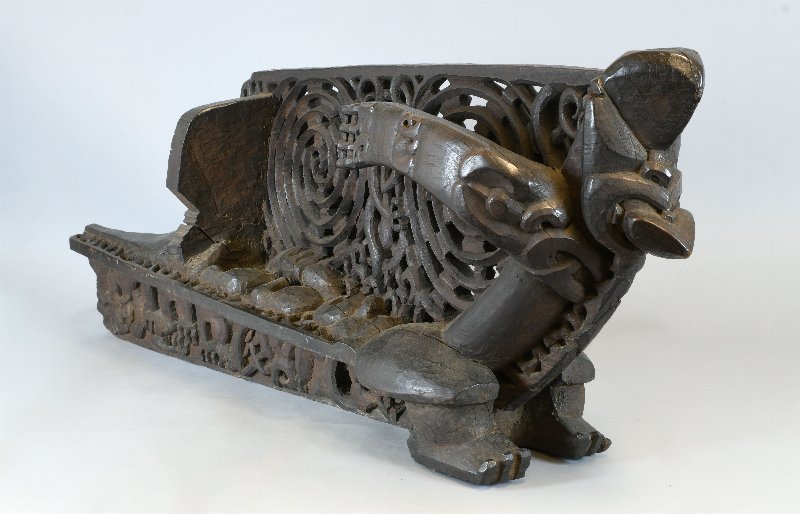
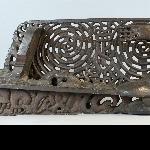
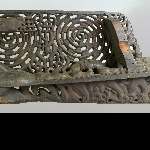
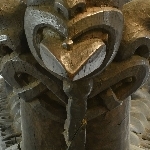
| Description | Carved prow (Tauihu) of war canoe (waka taua). This carved prow piece for a Māori war canoe is of the pītau style, which features two large pierced scrolls and, at the front, a carved figure with tongue protruding and arms thrown back. The figure represents Tūmatauenga, the god of war. Sticking out the tongue was, and is, a Māori gesture of defiance. Underneath the scrolls, on either side, are wheku (carved face that depicts an ancestor) figures. On the sides of the base, there are additional carved wheku and manaia (spiritual guardian) figures. According to Māori tradition, New Zealand (Aotearoa) was settled by a fleet of seagoing canoes. An iwi (Tribal Nation) might refer to itself as a waka (canoe), meaning that the members of the group were descended from the crew of a particular, named canoe. The Māori war canoe (waka taua) was not only a vessel used to transport warriors, but a sacred symbol of the village that built it. The waka taua was also seen as a manifestation of the collective body and spirit of the ancestors and of the power (mana) transmitted from them to the community. |
| Height | 54 cm |
| Length | 140 cm |
| Width | 47 cm |
| Credit Line | Purchased from W. O. Oldman, 1912 |
| Other Number | 26837 - Dealer's Number |
Report problems and issues to digitalmedia@pennmuseum.org.