

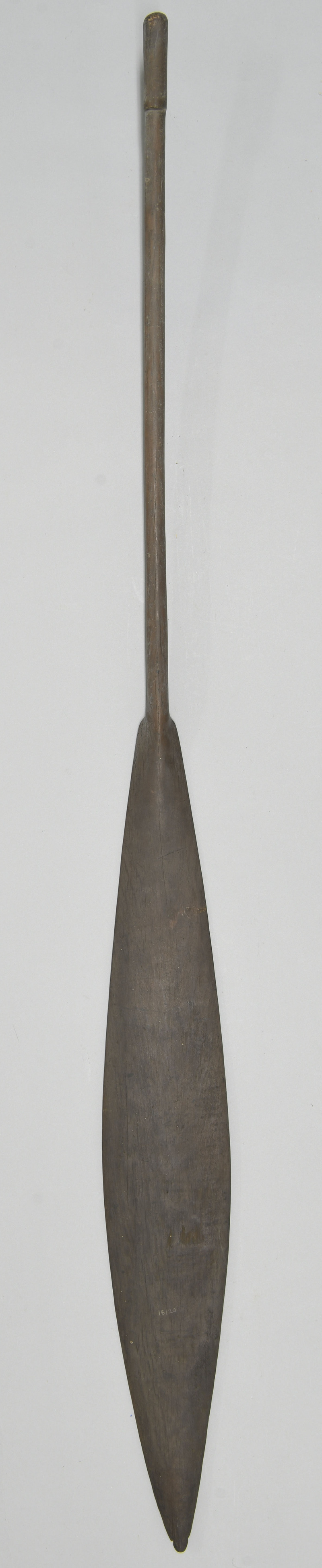

| Native Name | Hoe |
| Object Number | 18120A |
| Current Location | Collections Storage |
| Culture | Maori |
| Provenience | New Zealand |
| Period | Te Puawaitanga Period |
| Date Made | 1500-1800 CE |
| Section | Oceanian |
| Materials | Wood |
| Description | A wooden hoe (paddle) for a waka (canoe). Narrow, elongated diamond-shaped blade, undecorated. Towards the end of the handle, there is a slight protrusion along one side. Waka (canoes) are of central importance to Māori history and identity. Canoes were practical as they were necessary for trade, exploration, fishing, and warfare, but they were also symbols of Māori heritage. They represent the voyages that the ancestors undertook to migrate to and settle in New Zealand from their homeland. In Polynesian mythology, this homeland is called Hawaiki, the original home of all Polynesians. A waka is also vital to personal and community identity, as each iwi (Tribal Nation) is associated with a specific waka, which connects a person to their ancestors and land. |
| Length | 172 cm |
| Credit Line | Gift of William Pepper, 1891 |
Report problems and issues to digitalmedia@pennmuseum.org.