

| Native Name | Korowai |
| Object Number | 97-24-1 |
| Current Location | Collections Storage |
| Culture | Maori |
| Provenience | New Zealand |
| Period | Te Huringa I Period |
| Date Made | 1800 - 1900 CE |
| Section | Oceanian |
| Materials | New Zealand Flax | Wool |
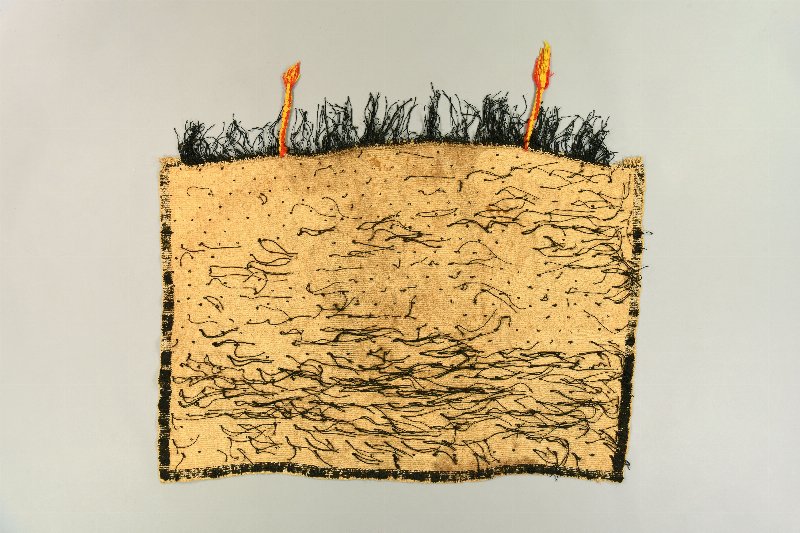
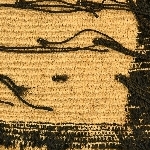
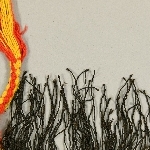
| Description | Flax cloak of the korowai type, ornamented with black tags (hukahuka) of rolled flax fiber spaced at approximately 3" intervals over the body and a heavy fringe of black hukahuka along the neck border (hanging down when the garment is worn). The two sides and bottom are bordered with rows of short rolls of black flax fiber. Small fringes of natural flax fiber warp at the top corners. Two braided ties of bright yellow and orange wool yarn. Many tags from the body and fringe have come off and are missing; the side and bottom borders are much worn. Some brown stains. Korowai is a flax cloak that originated from a practical rain cape. The korowai became a more elaborate garment, often adorned with hukahuka (long cords of rolled muka fiber) or pokinikini, cylindrical strands of dried harakeke with intervals of black-dyed muka. A korowai can be worn in three primary styles: draped evenly over both shoulders and fastened at the chest; wrapped beneath one arm and secured at the opposite shoulder; or laid across a single shoulder and tied at the other. |
| Length | 101 cm |
| Width | 145 cm |
| Credit Line | Gift of James P. and Louise T. McGowan, 1997 |
Report problems and issues to digitalmedia@pennmuseum.org.