

Canoe Stern Piece
Model
P3223
From: New Zealand
Curatorial Section: Oceanian
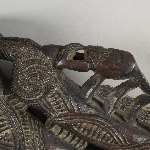
| Native Name | Taurapa |
| Object Number | P3223 |
| Current Location | Collections Storage |
| Culture | Maori |
| Provenience | New Zealand |
| Period | Te Huringa I Period |
| Date Made | 1800 - 1900 CE |
| Section | Oceanian |
| Materials | Wood | Abalone |
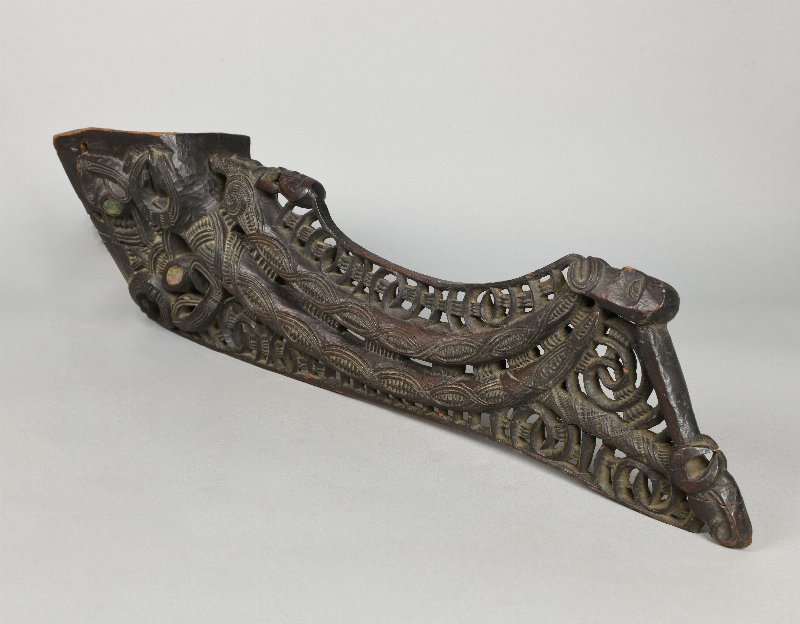
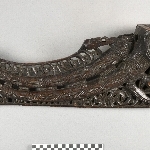
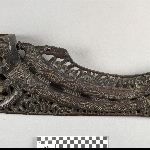
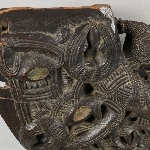
| Description | A model of a taurapa (canoe stern post) of a waka (canoe) carved from one piece of wood. A small model carved with steel tools in the Whanganui style. Two ribs with a head at the tip, a small figure at the base. Figure of the storm god Paikea on its upper end, and another figure called Puhi-Kai-Ariki, which looks into the canoe. Decoration in the ribs is two intertwined lines with pākati in the ovals between them. Pāua (abalone) shell inlay. Waka (canoes) are of central importance to Māori history and identity. Canoes were practical as they were necessary for trade, exploration, fishing, and warfare, but they were also symbols of Māori heritage. They represent the voyages that the ancestors undertook to migrate to and settle in New Zealand from their homeland. In Polynesian mythology, this homeland is called Hawaiki, the original home of all Polynesians. A waka is also vital to personal and community identity, as each iwi (Tribal Nation) is associated with a specific waka, which connects a person to their ancestors and land. |
| Height | 137.16 cm |
| Credit Line | Purchased from the J. C. Stevens Auction Rooms, 1912 |
| Other Number | 27558 - Dealer's Number | 44a - Dealer's Number |
Report problems and issues to digitalmedia@pennmuseum.org.