

| Object Number | A575 |
| Current Location | Collections Storage |
| Culture | Indian | Hindu |
| Provenience | India | Gujarat | Kutch |
| Period | 20th Century |
| Date Made | Early 20th Century |
| Section | Asian |
| Materials | Silk |
| Technique | Embroidered | Dyed | Woven |
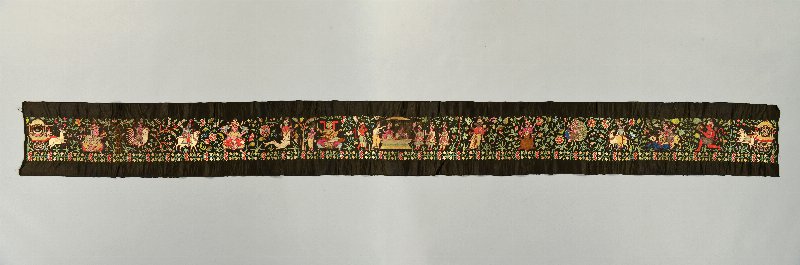
| Iconography | Vishnu | Krishna | Chandra | Ganesha | Bahuchara Mata | Shiva | Nanda | Lakshmi | Matsya | Narasimha | Hiranyakashipu | Hanuman | Rama | Sita | Varaha | Kurma | Kartikeya | Durga | Mahishasura | Surya |
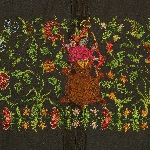
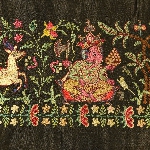
| Description | Embroidered border, likely created for a form of religious hanging, perhaps a pichhwai (figurative textile hung behind the image of Krishna in Hindu shrines). Black silk twill embroidered in chain stitch with multicolored silk threads. This form of embroidery, worked with a small hook (aari), was a specialty of the Mochi community in Kachchh (Kutch). The design displays Hindu deities, especially incarnations of Vishnu, of which there are many interpretations. From left to right: Chandra (the moon god) being pulled in a chariot; Ganesha (identified by his Elephant head); Bahuchara Mata (riding a rooster vahana, or animal vehicle); Shiva riding Nandi (the bull); Lakshmi with two elephants; Matsya (the giant fish); Narasimha defeating Hiranyakashipu; Hanuman (the monkey) with Ram and Sita seated in a palanquin; Varaha (the boar); Kurma (the giant tortoise); Kartikeya on a peacock vahana; Krishna playing the flute; Durga slaying Mahishasura; Hanuman lifting Sanjeevani mountain; and Surya (the sun god) being pulled by a chariot. |
| Length | 108 cm |
| Width | 25.5 cm |
| Credit Line | Purchased from F. P. Bhumgara & Company, 1904 |
Report problems and issues to digitalmedia@pennmuseum.org.