

Walking Stick
18105
From: New Zealand | North Island | Hawke's Bay Region | Napier
Curatorial Section: Oceanian
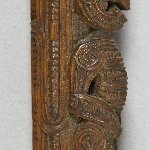
| Native Name | Tokotoko |
| Object Number | 18105 |
| Current Location | Collections Storage |
| Culture | Maori |
| Provenience | New Zealand | North Island | Hawke's Bay Region | Napier |
| Period | Te Huringa I Period |
| Date Made | 1800 - 1900 CE |
| Section | Oceanian |
| Materials | Totara Wood (Podocarpus totara) | Abalone |
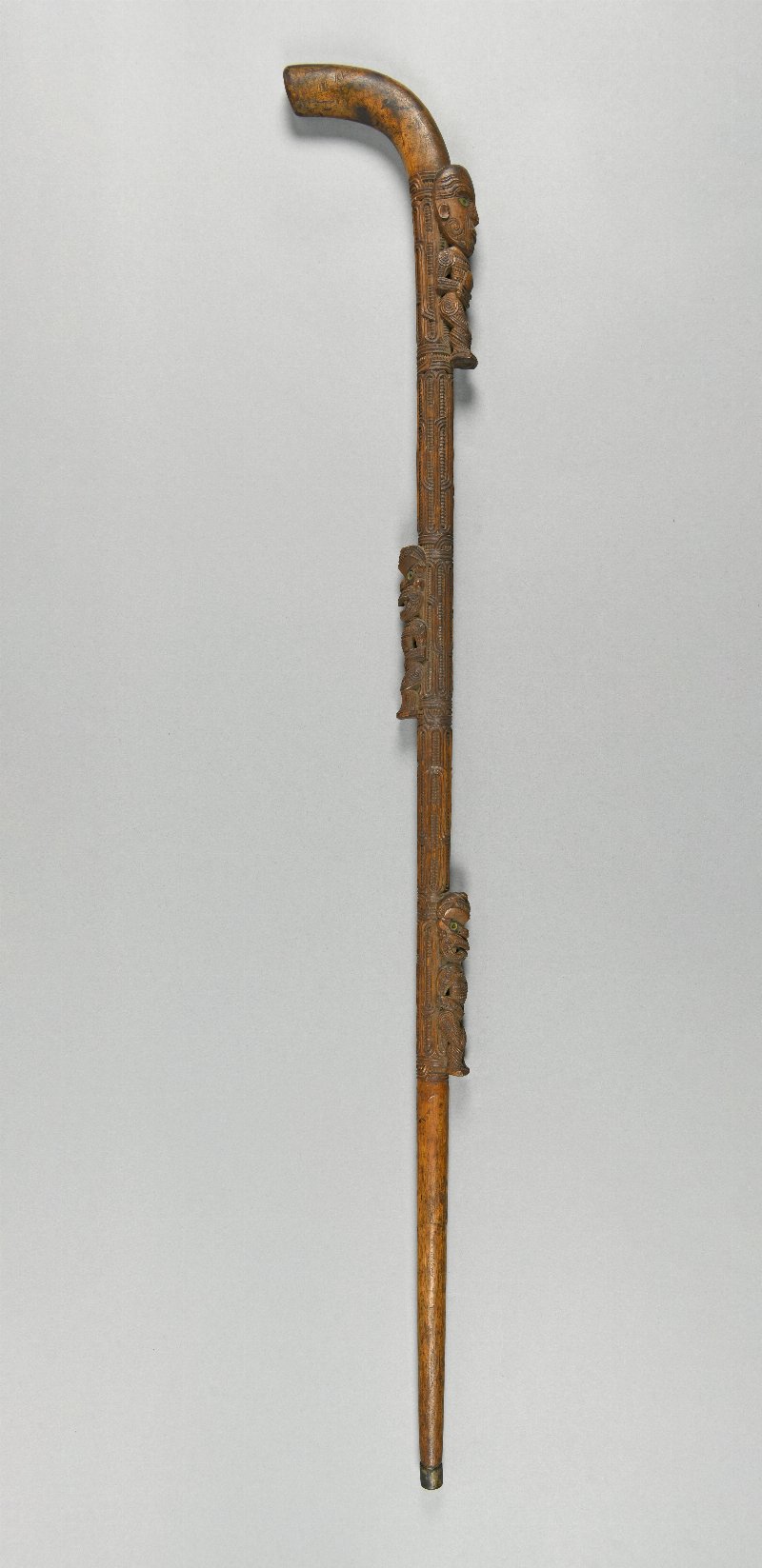
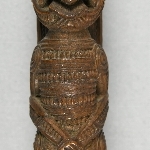
| Description | A tokotoko (walking stick) is made of one piece of wood. The upper and lower halves of the walking stick are undecorated. The middle of the tokotoko has one naturalistic figure and two wheku figures with a background of rauponga (rows of dog tooth notches between parallel grooves and ridges). The top figure is a naturalistic figure with facial moko (tattoo), they are holding a patu (hand club) in one hand. The other three fingers of the hand are placed along the stomach. The figure's body is covered in pākati (dog tooth grooves). The wheku figures have open mouths and hands folded over the pelvis. Each of the wheku figures has pākati (dog tooth grooves) decoration on the body. Each of the three figures has pāua (abalone) shell eyes. At the bottom of the walking stick is a metal cap. A tokotoko is a walking stick that is both practical and symbolic in Māori culture. It is commonly used by elders and orators during formal speeches, particularly on the marae (sacred place), where it signifies the speaker’s right to speak and their connection to whakapapa (genealogy/identity). It can also be used as support when walking. |
| Length | 99 cm |
| Credit Line | Gift of William Pepper, 1891 |
Report problems and issues to digitalmedia@pennmuseum.org.