

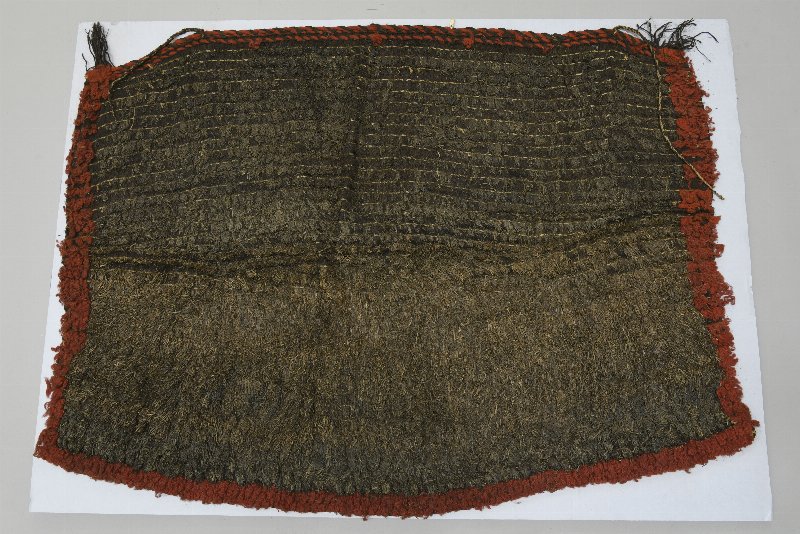
Cloak
18132
From: New Zealand | North Island | Bay of Plenty Region | Rotorua | Ohinemutu
Curatorial Section: Oceanian
| Native Name | Pihepihe |
| Object Number | 18132 |
| Current Location | Collections Storage |
| Culture | Maori |
| Provenience | New Zealand | North Island | Bay of Plenty Region | Rotorua | Ohinemutu |
| Period | Te Huringa I Period |
| Date Made | 1800 - 1900 CE |
| Section | Oceanian |
| Materials | New Zealand Flax | Wool |
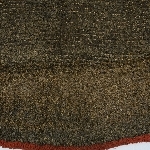
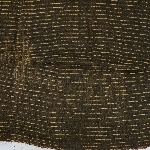
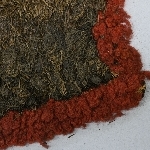
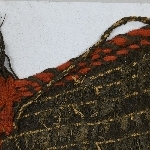
| Description | Rectangular cloak (pihepihe) consisting of muka (processed New Zealand flax) dyed black, twisted fibers secured by widely spaced light colored horizontal wefts. Front covered with tags consisting of bundles of flat grayish-black strips. Fringes of rolled black fiber at top corners, two ties of twisted light and dark fiber. Bright red wool was threaded in rows across the top, and in closely spaced clumps along the other three edges. A pihepihe is a Māori cloak that is made of muka (processed New Zealand flax), which could be worn every day. Māori cloaks are made using whatu, which is a finger weaving technique. Looms and spinning wheels were not used in Māori weaving. Instead, a cord between two turuturu (weaving pegs) was used. The whenu (warp threads) were hung vertically from this cord, while the finer aho (weft threads) were woven horizontally from left to right. According to notes made by the collector C.D. Voy, the cloak once belonged to a great Māori Chief and was only worn on great occasions. |
| Length | 87 cm |
| Width | 117 cm |
| Credit Line | Gift of William Pepper, 1891 |
Report problems and issues to digitalmedia@pennmuseum.org.