


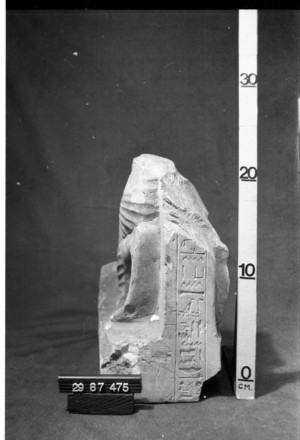
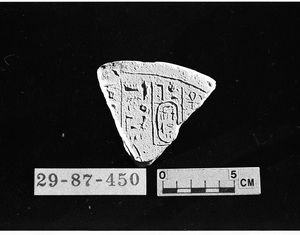
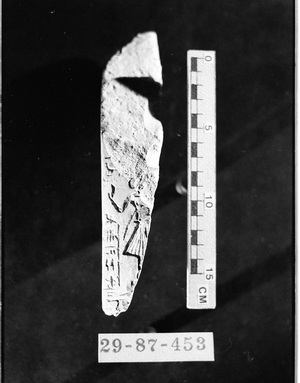
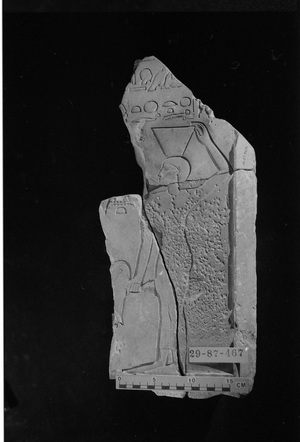
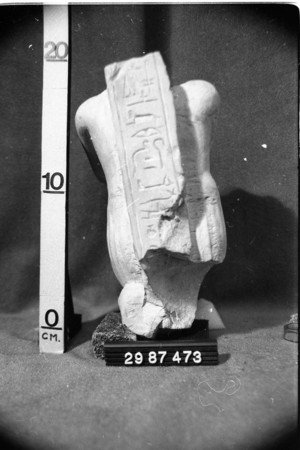
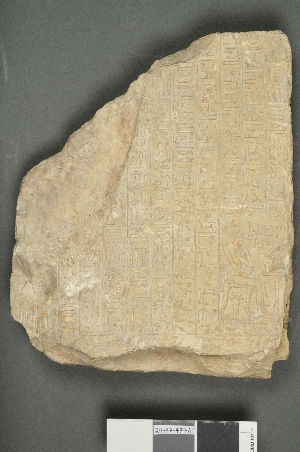
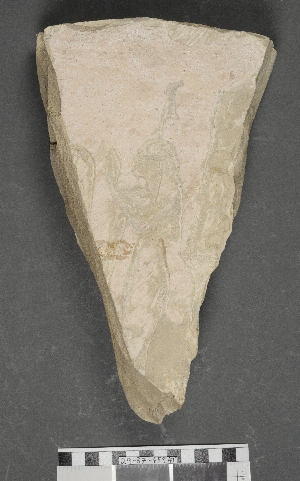
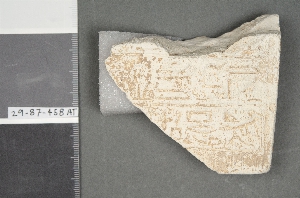
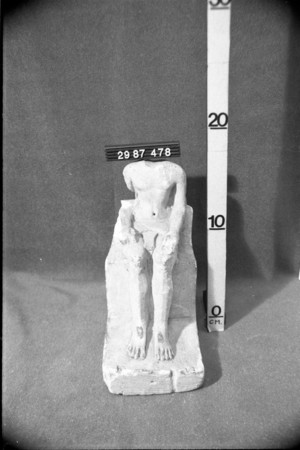
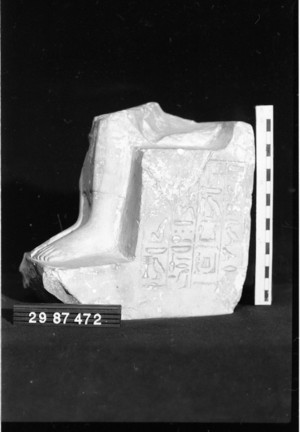
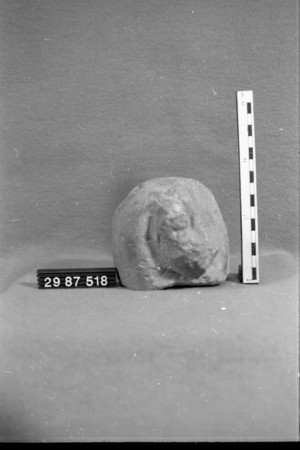
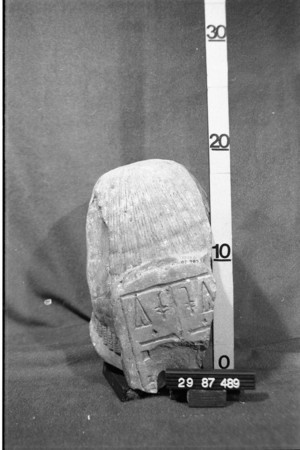
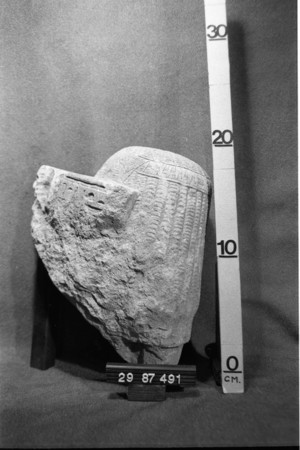
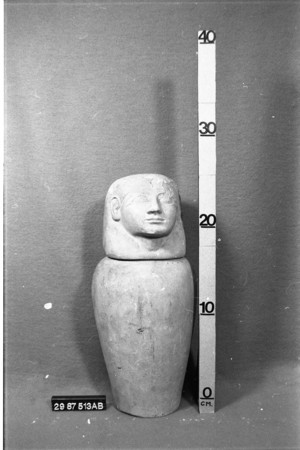
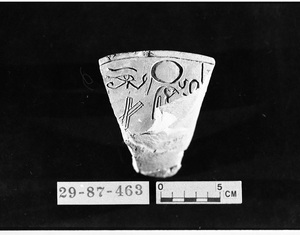
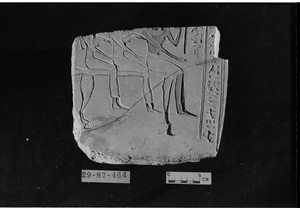
Located on the west bank of the Nile near Thebes, the Egyptian site of Dra Abu el-Naga is an important non-royal cemetery or necropolis. From 1921 to 1923, Clarence Fisher excavated at the site, focusing on the tombs of New Kingdom officials and the mortuary complex of the 18th Dynasty King Amenhotep I and his wife Nefertari (1525-1504 BCE). His excavations provided significant artifacts for the Penn Museum, including statuary, pottery funerary furnishings, and painted reliefs.
- Object[162]
- egyptian[162]
- amulet mold[3]
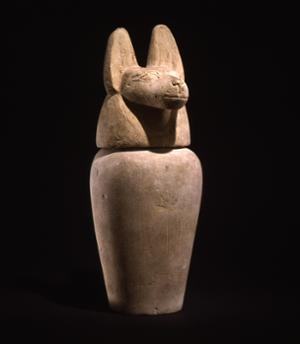
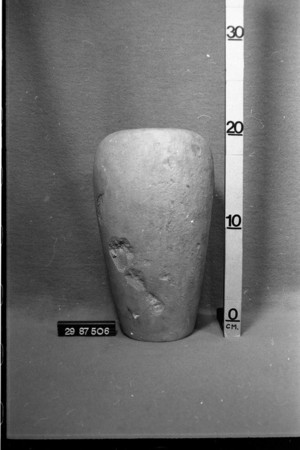
- canopic jar[13]
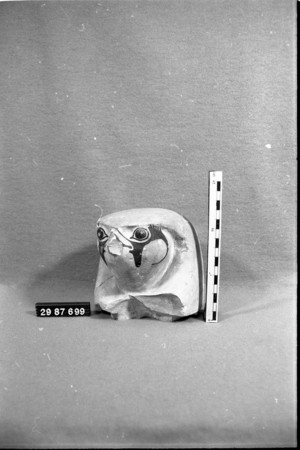
- canopic jar lid[4]
- figurine[1]
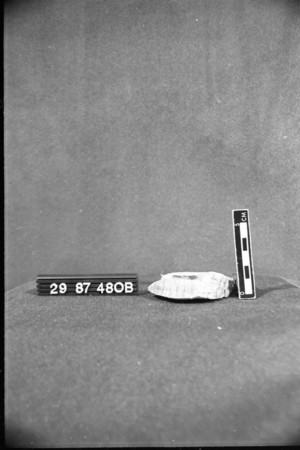
- flake[2]
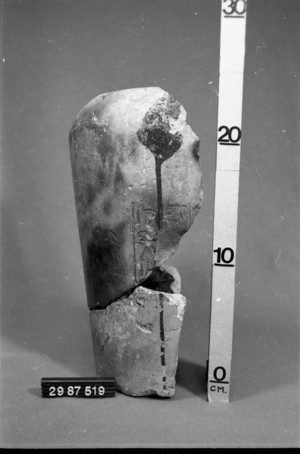
- fragment[2]
- funerary stela[1]
- jar lid[4]
- kohl pot[1]
- limestone fragment[5]
- model[1]
- mold[4]
- object[2]
- ostracon[44]
- relief fragment[2]
- scarab[1]
- seal (object)[1]
- shawabti[3]
- sherd[1]
- spinning implement[1]
- statuary[29]
- statue[4]
- statuette[2]
- stela[7]
- stela fragment[24]
- trial piece[1]
- weight[1]
- dra abu el-naga[162]
- egypt[162]
- 22 n 22[1]
- area 1[18]
- area 1, n. of mud house about 1 metre below surface[1]
- area 1, pyramid[1]
- court 15[1]
- court of brick tomb 3[3]
- court of no. 6 tomb[3]
- court of tomb 158[3]
- court of tomb 159[1]
- court opposite brick tomb i[1]
- courtyard 18/x[1]
- courtyard tomb 158/x[2]
- courtyard tomb 18/x[1]
- dan 14[1]
- debris above u.c. 288[1]
- debris east of no. 4 tomb, upperr tier[1]
- debris opposite tomb xi[1]
- debris over tomb xi[1]
- l cemetery x debris west of rock scrap x/2[1]
- l. cemetery i 1. surface x x/1[1]
- l. cemetery i, 3, x/3[1]
- l. cemetery ii, 1[2]
- l. cemetery ii, 3, tomb 6 a, x/9[1]
- l. cemetery small temple/x[1]
- l. cemetery, i. 1. surface x[1]
- l. cemetery, small temple, n.w. corner, x/1[1]
- l.c. 24 a, x/13[1]
- l.c. 308, over outer sill, x/1[1]
- l.c. 308, over sill, x/2[1]
- l.c. 65 x 15[3]
- l.c. 71[1]
- l.c. 71 shaft x[1]
- l.c. 71 shaft x1[1]
- l.c. 71 x[1]
- l.c. 75 x/10[2]
- l.c. 78, room n. x/6[3]
- l.c. 78, x/5[1]
- l.c. ii, 3, surface x x1[1]
- l.c. iii x25[1]
- l.c. iii, 20 shaft, x/5[1]
- l.c. iii, 3, 19 a, x/1[1]
- l.c. iv, 1--2, debris x[1]
- l.c. iv, 3, 35, x/1[1]
- l.c. iv, 3, 44, x/2[2]
- l.c. v, 1, 34 a, x/2[1]
- l.c. v, surface x, x/1[3]
- l.c. vi[1]
- l.c. vi, 1, 46, x/6[1]
- l.c. vi, 1, 71 shaft x, x/3[1]
- l.c. vi, 2, 53 shaft, x/3[1]
- l.c. vi, 2, 60[1]
- l.c. vi, 2, 60 shaft, x/1--3[4]
- l.c. vi, 3, 55, x/1[1]
- l.c. vi, 3, 55, x/3[1]
- l.c. vi, 3, 65 x, x/12[1]
- l.c. vi, 3, 65, x/138[1]
- l.c. vii. 2: 63x4[1]
- lc 3,50 a[1]
- lc 306, x/6[2]
- lc 306, x/7[1]
- lc 63 x7[1]
- lc ii 3, tomb 6a[2]
- lc iii[1]
- lc tomb 6a[2]
- lc vi[3]
- lc vi 2,60[1]
- lc vi2,60[1]
- lc1 x2[1]
- lc6; 2/60/x/3[1]
- lower cemetery, tomb 76[1]
- lower terrace debris[1]
- m162[1]
- mandara 162, lower court n. end x/2[1]
- mandara 162, lower level of court, x/13[1]
- mandara 8, w. chamber[1]
- mandara, 162, debris outer vestibule[1]
- no. 1 tomb courtyard[1]
- pyramid 35[1]
- shaft 12[1]
- south of tomb 6[4]
- south of white wall[1]
- t 158[1]
- t14[1]
- t158[1]
- t4[1]
- t6a[1]
- tomb 158/x[1]
- tomb 159[1]
- tomb 16/x[2]
- tomb 283, outer court, west end.[1]
- tomb 3, brick[1]
- tomb 303[1]
- tomb 4[1]
- tomb tt 283[1]
- tt158[1]
- u. c. 158[1]
- u. c. large heap x w of pyr. 7x[1]
- u. t. --?-- x/6[1]
- u.c. 156, from debris in tunnel to burial chamber[1]
- u.c. 158, below sill of pylon[1]
- coptic language[12]
- demotic[1]
- hieratic[5]
- hieroglyphic[47]
- inscribed[2]
- yes[34]

1 - 30 of 162 Records

1 - 30 of 162 Records