Skip Navigation Penn Museum logo
  • My Finds 0
Online Collections
  • Browse

    Browse

    Search Collections
    Highlights
    Collections Map
    Objects On View
    Video/Film
  • About

    About

    About Collections
    Access the Collections
    Download Data
    Rights and Permissions
  • Read More

    Read More

    Journal (1919-1935)
    Bulletin (1930-1958)
    Expedition (1958-Present)
    Publications
    Our Blog: Penn Museum Voices
    Websites
  • Search
  • Browse
    • Search Collections
    • Highlights
    • Collections Map
    • Objects On View
    • Video/Film
  • About
    • About Collections
    • Access the Collections
    • Download Data
    • Rights and Permissions
  • Read More
    • Journal (1919-1935)
    • Bulletin (1930-1958)
    • Expedition (1958-Present)
    • Publications
    • Our Blog: Penn Museum Voices
    • Websites
  • Search
  • Penn Museum logo
Online Collections
My Finds 0
Online Collections

New Mexico Expedition, E. B. Howard, 1936

Accession Lot

  • Object[270]
  • yes[270]
  • no[266]
  • yes[4]
  • american[270]
  • abrader[1]
  • adze[1]
  • arrowhead[3]
  • awl[2]
  • ball[1]
  • base[1]
  • blade[8]
  • boulder (stone)[1]
  • chip[19]
  • clovis projectile point[2]
  • disc[1]
  • flake[9]
  • flakes[1]
  • flint[8]
  • folsom point[5]
  • foreshaft[1]
  • graver[1]
  • hammerstone[3]
  • implement[5]
  • jasper[3]
  • knife[30]
  • object[1]
  • pebble[2]
  • point[13]
  • projectile point[1]
  • reject[1]
  • saw[1]
  • scraper[53]
  • shell[2]
  • sherd[80]
  • stem[2]
  • stone[8]
  • worked stone[1]
  • anderson lake[33]
  • beck forest lake[6]
  • blackwater draw[3]
  • boyd cave[2]
  • clovis[60]
  • gravel pit[24]
  • keetzeel[26]
  • maljamar[23]
  • mammoth pit[1]
  • near clovis[2]
  • near railroad mountain[2]
  • new mexico[270]
  • polard lake[41]
  • potaler clovis[11]
  • railroad mountain[19]
  • second jernada site[13]
  • site 1[7]
  • site 10[41]
  • site 2[51]
  • site 3[18]
  • site 4[15]
  • site 5[21]
  • site 6[11]
  • site 7[6]
  • site 8[33]
  • site 9[2]
  • paleoindian[4]
  • clovis[2]
  • southwest culture area[270]
  • "from gravels as deep in side of bank as 6' 5". trail cut along side in 1934, 5 ft. wide. pottery sherds in 17" deeper."[10]
  • "mound" - adobe walls[13]
  • from gravel bank about 200 yards e. n.e. of kim, depth 18"[3]
  • from gravel bank about 200 yards e. n.e. of kim, depth 25"[1]
  • from gravel bank about 200 yards e. n.e. of kim, depth 26"[1]
  • from gravel bank about 200 yards e. n.e. of kim, depth 32"[3]
  • from gravel bank about 200 yards e. n.e. of kim, depth 38"[3]
  • gravel pit 15 miles sw of clovis[1]
  • surface[2]
  • surface of gully in front of rim.[4]
  • animal bone[1]
  • bone[2]
  • chalcedony[32]
  • chert[7]
  • clay[81]
  • edwards chert[4]
  • flint[59]
  • granite[1]
  • jasper[13]
  • obsidian[5]
  • pigment[37]
  • quartz[1]
  • quartzite[8]
  • sandstone[4]
  • shell[2]
  • slate[3]
  • stone[48]
  • chipped[176]
  • yes[4]

241 - 270 of 270 Records
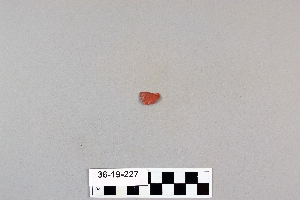
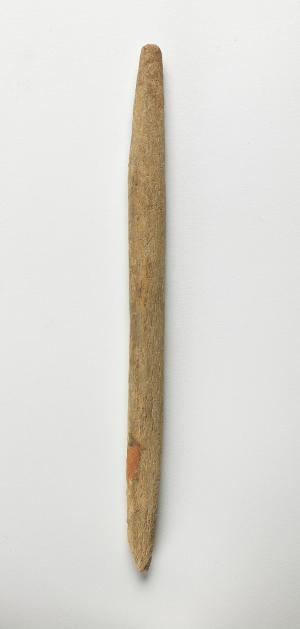
36-19-227

36-19-227

Jasper

Add to My Finds +
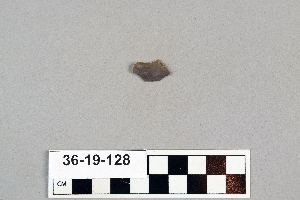
36-19-128

36-19-128

Chip

Add to My Finds +
36-19-127

36-19-127

Chip

Add to My Finds +
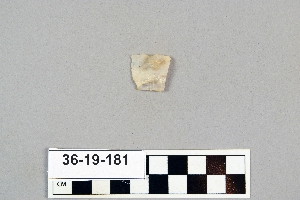
36-19-181

36-19-181

Knife

Add to My Finds +
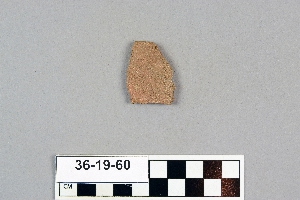
36-19-60

36-19-60

Sherd

Add to My Finds +
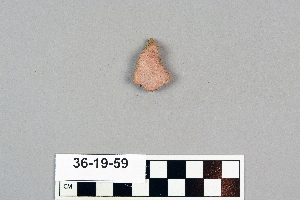
36-19-59

36-19-59

Sherd

Add to My Finds +
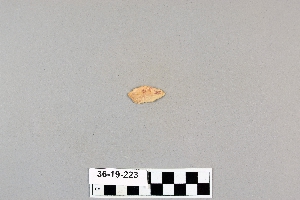
36-19-223

36-19-223

Point

Add to My Finds +
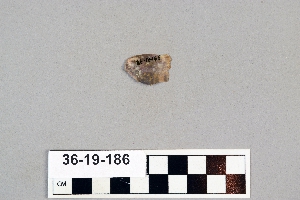
36-19-186

36-19-186

Knife

Add to My Finds +
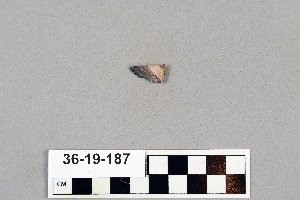
36-19-187

36-19-187

Knife

Add to My Finds +
36-19-3

36-19-3

On Display

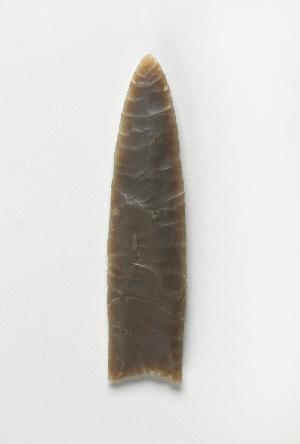
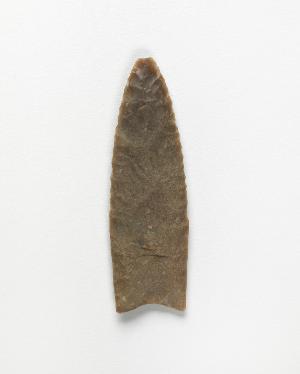
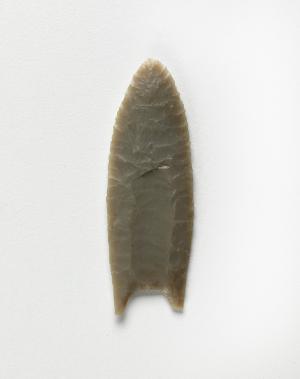
Clovis Projectile Point

Add to My Finds +
36-19-2

36-19-2

On Display

Clovis Projectile Point

Add to My Finds +
36-19-1

36-19-1

On Display

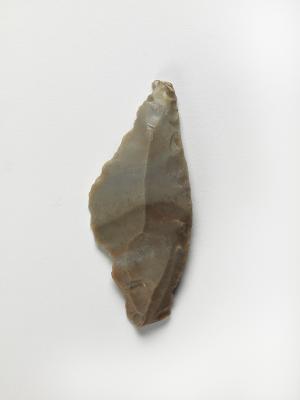
Scraper

Add to My Finds +
36-19-16

36-19-16

On Display

Folsom Point

Add to My Finds +
36-19-6

36-19-6

Foreshaft

Add to My Finds +
  • 1
  • 2
  • 3
  • 4
  • 5
  • 6
  • 7
  • 8
  • 9
241 - 270 of 270 Records
Penn Museum Homepage.

3260 South Street Philadelphia, PA 19104

215.898.4000 | © Penn Museum 2026

YouTube icon. Facebook icon. Instagram icon. LinkedIn icon.
ABOUT MEMBERSHIP SUPPORT PRESS HOST AN EVENT
The Penn Museum respectfully acknowledges that it is situated on Lenapehoking, the ancestral and spiritual homeland of the Unami Lenape.

World Wonders in your inbox.

Sign up for our Newsletter
Subscribe
UPenn logo.
Report Web Accessibility Issues and Get Help Contact Terms & Conditions Disclaimer Privacy